

Everything You Need to Know About Forward Helix Piercings
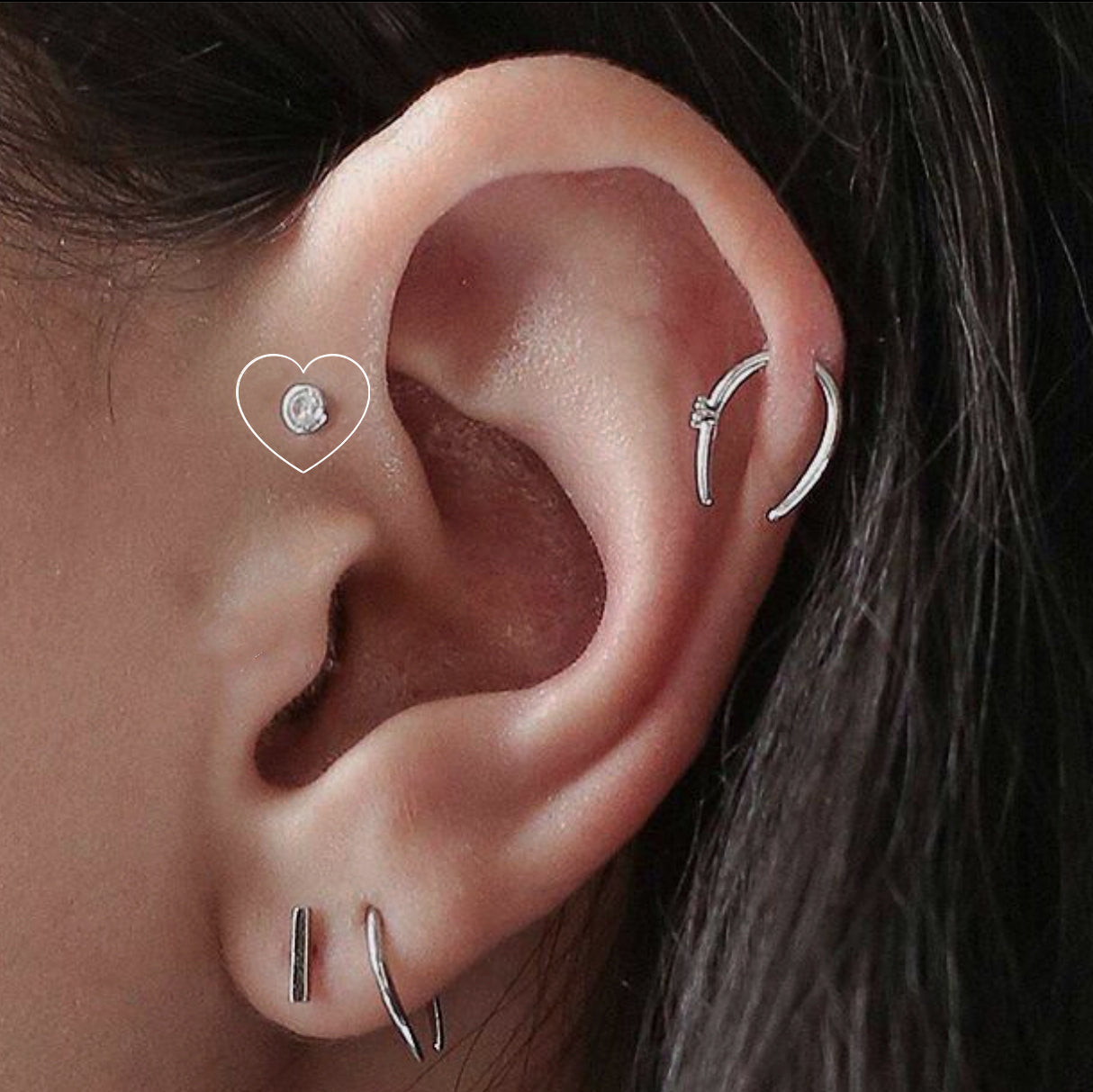
A forward helix piercing sits on the small rim of cartilage at the very front of the top of your ear, where the ear meets your head. It is a standard helix moved to the front, and because that rim is short and close to the face, it is one of the few cartilage spots that reads clearly from the front.
This guide covers where the forward helix is, how it differs from a regular helix, how much it hurts, how long it takes to heal, what gauge and size you need, and which earrings suit it, including how double and triple forward helix stacks work.
Forward Helix Piercing Fast Facts
- PLACEMENT: The small rim of cartilage at the top front of the ear, just above the tragus and in front of the rook.
- PAIN LEVEL: 5/10. A small, tight spot for the piercer to work in.
- HEALING TIME: 3 to 6 months, sometimes longer.
- GAUGE: 18 gauge (1.0mm) is typical; some piercers use 16 gauge (1.2mm).
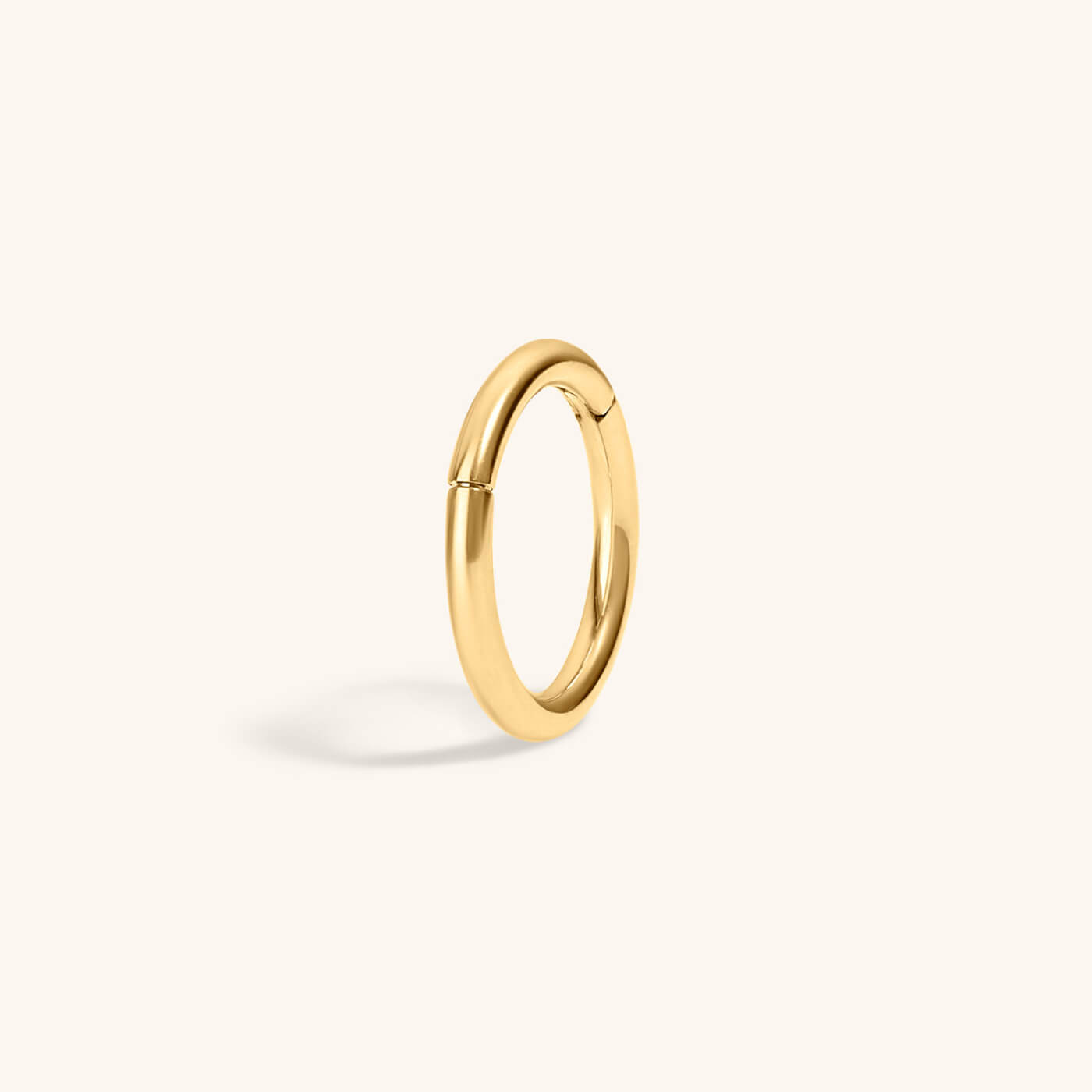
- JEWELRY SIZE: 6mm or 8mm post for a flat back; a 5mm to 8mm inner diameter for a hoop once healed.
- JEWELRY: Flat back studs, the standard for this spot. Small hoops only once fully healed.
What Is a Forward Helix Piercing?
Run a finger along the outer rim of your ear from the top down toward your face. Where the rim curls in and meets your head, just above the tragus, there is a short stretch of cartilage that faces forward. That is the forward helix, and the piercing goes through it front to back, so a stud sits facing outward toward whoever is looking at you.
It is a small area, which is part of the appeal: the jewelry is necessarily tiny, and the placement is unusual enough to read as deliberate. Because the rim is short, there is room for one, two, or three piercings in a row, which is where the double and triple forward helix come from.
Not every ear has enough rim here. Some people's forward helix is a narrow fold with little cartilage behind it, and a good piercer will tell you whether yours can hold a piercing comfortably, and how many.
Forward Helix vs Helix: What Is the Difference?
Both piercings go through the outer rim of the ear, the helix. The difference is where on the rim.
- A helix piercing sits on the upper outer rim, the long curve at the top and back of the ear. There is more room, so helix jewelry can be a stud or a hoop in a wider range of styles, sized by your piercer to the depth and shape of your ear, and the piercing is seen mostly from the side.
- A forward helix piercing sits on the short front section of that same rim, closest to your face. Space is tight, the cartilage is thinner, and the piercing is seen from the front. Jewelry stays small, and studs are the norm.
Piercers often place them together: a forward helix on the front rim balancing a helix or two on the back rim is one of the most common ear-stack combinations. If you are deciding between the two for a first cartilage piercing, the helix is the easier one to heal and to dress; the forward helix is the more distinctive one.
Does a Forward Helix Piercing Hurt?
A forward helix piercing rates about a 5 out of 10 for pain, about the same as a standard helix. Pain is personal and depends on your anatomy and your piercer, but the cartilage here is thin, so the needle passes quickly. What people notice is the awkwardness of the spot: the piercer is working in a small, curved space right next to your face, and you feel pressure against your head as it happens.
It is over in a second or two. Expect the area to feel warm and tender for a few days. If you are getting a double or triple, each one hurts about the same, but the second and third sit in cartilage that is already sore, which is why some people space them across visits.
How Long Does a Forward Helix Piercing Take to Heal?
Plan on 3 to 6 months, sometimes longer. The forward helix is thin cartilage, so it tends to heal faster than a conch or rook, but it sits exactly where glasses, hair, phones, and pillows all press, so irritation bumps are common if it gets bumped a lot.
What helps:
- Leave the jewelry alone until your piercer confirms it has healed, apart from the downsizing your piercer does once initial swelling subsides. Swapping it yourself early is an easy way to set healing back.
- Clean with sterile saline once or twice a day and let it air dry. Do not twist or rotate the jewelry.
- Watch your glasses. If the arm of your frames sits on the piercing, adjust them or expect a slower heal. Sunglasses pushed up onto the head are a common culprit.
- Sleep on the other side and keep hair products and phone screens off it. Pressure on a healing forward helix can cause irritation bumps.
Once your piercer gives the all-clear, you can change the jewelry yourself. A push pin flat back is the easiest style to swap; our guide to changing piercing jewelry walks through it. Redness, tenderness, and a little clear crust are normal along the way. Increasing pain, heat, swelling, or yellow or green discharge are not; cartilage infections can become serious, so see a healthcare professional rather than waiting it out.
Forward Helix Piercing Gauge and Jewelry Size
Most forward helix piercings are done at 18 gauge (1.0mm); some piercers use 16 gauge (1.2mm), the standard for thicker cartilage. Ask which you were pierced with and match your jewelry to it. Standard lobe earrings are 20 gauge, about 0.8mm, and are too thin for either.
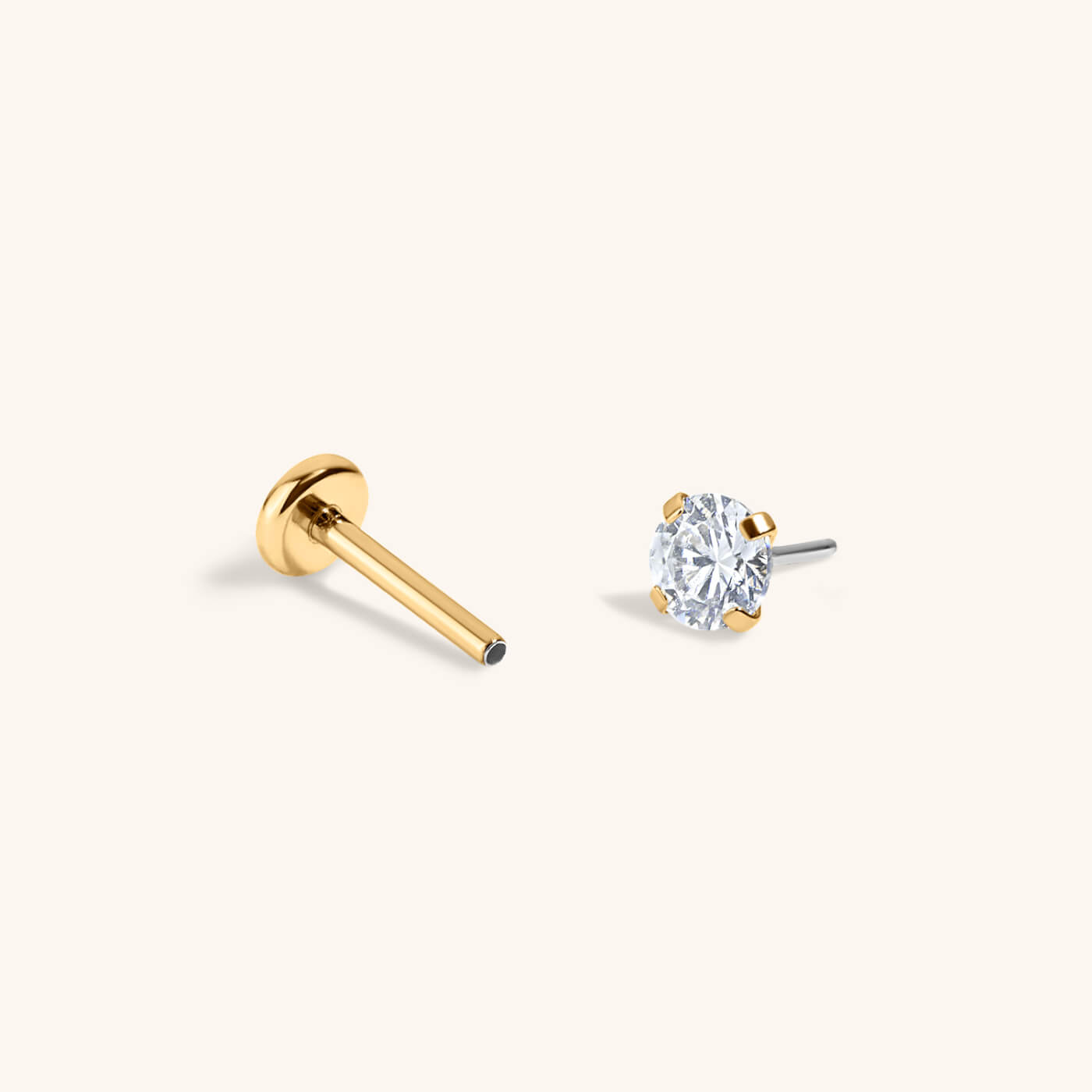
Post length for a flat back is 6mm or 8mm. Your piercer will usually start you on the longer post to allow for swelling and downsize you to the shorter one once it settles, typically a few weeks in. The forward helix is thin, so most healed forward helix piercings end up on a 6mm post.
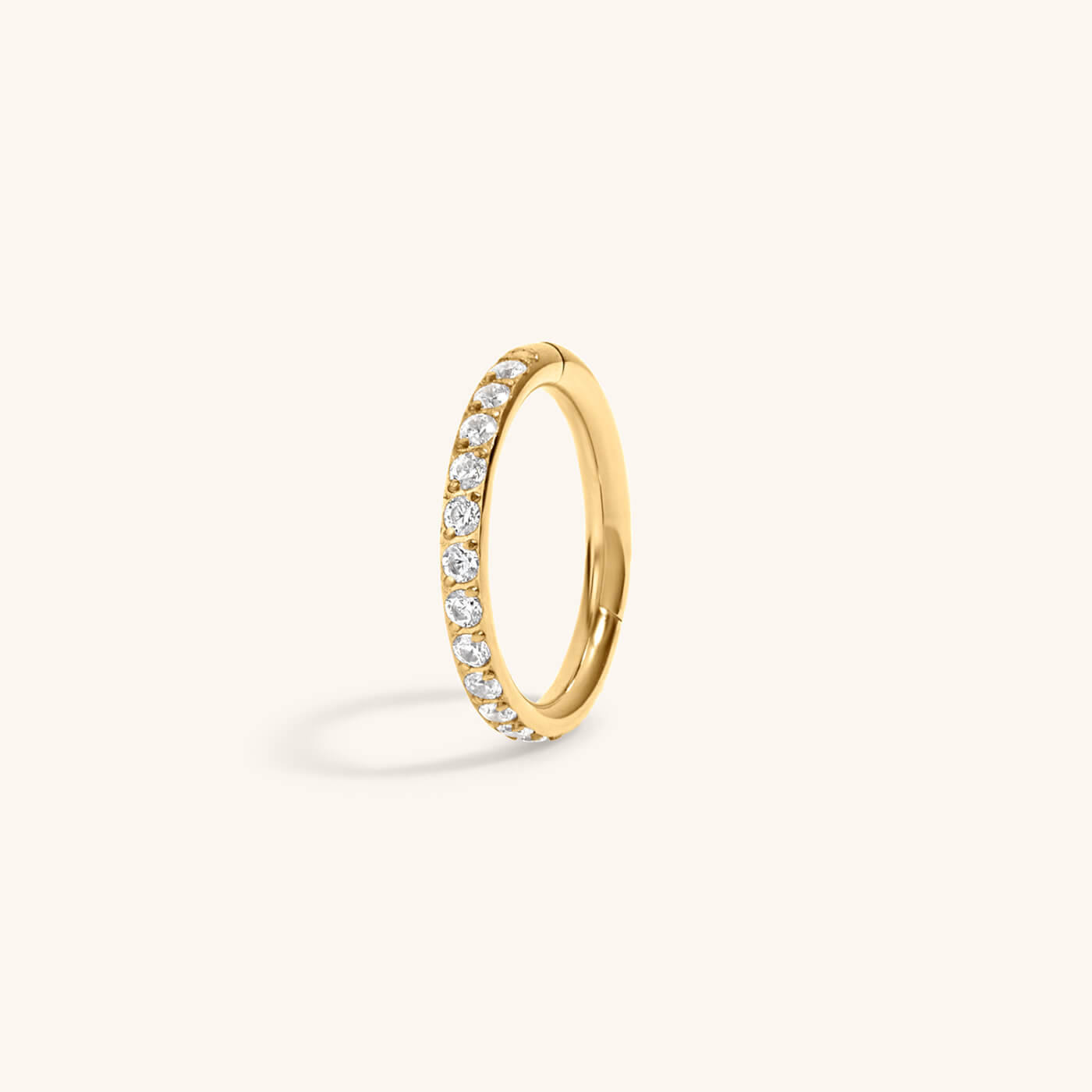
For a hoop, the measurement is the inner diameter, and it needs to be small here: 5mm to 8mm is typical, depending on how far from the edge your piercing sits. Hoops belong on a fully healed forward helix; they move, and this spot is easily irritated.
Not sure what you were pierced with? Ask your piercer, or read our jewelry sizing guide for how to measure what you already own.
The Best Forward Helix Earrings
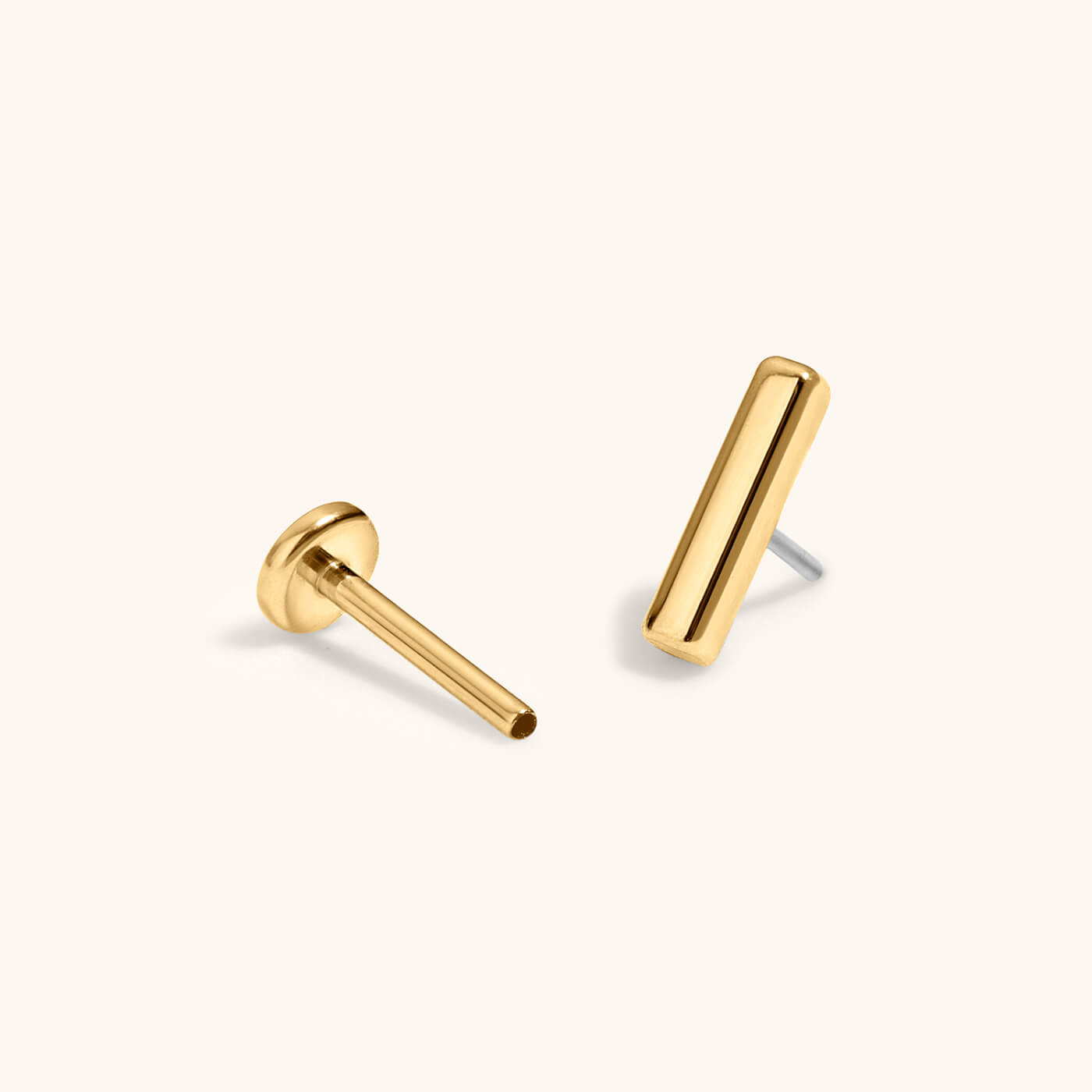
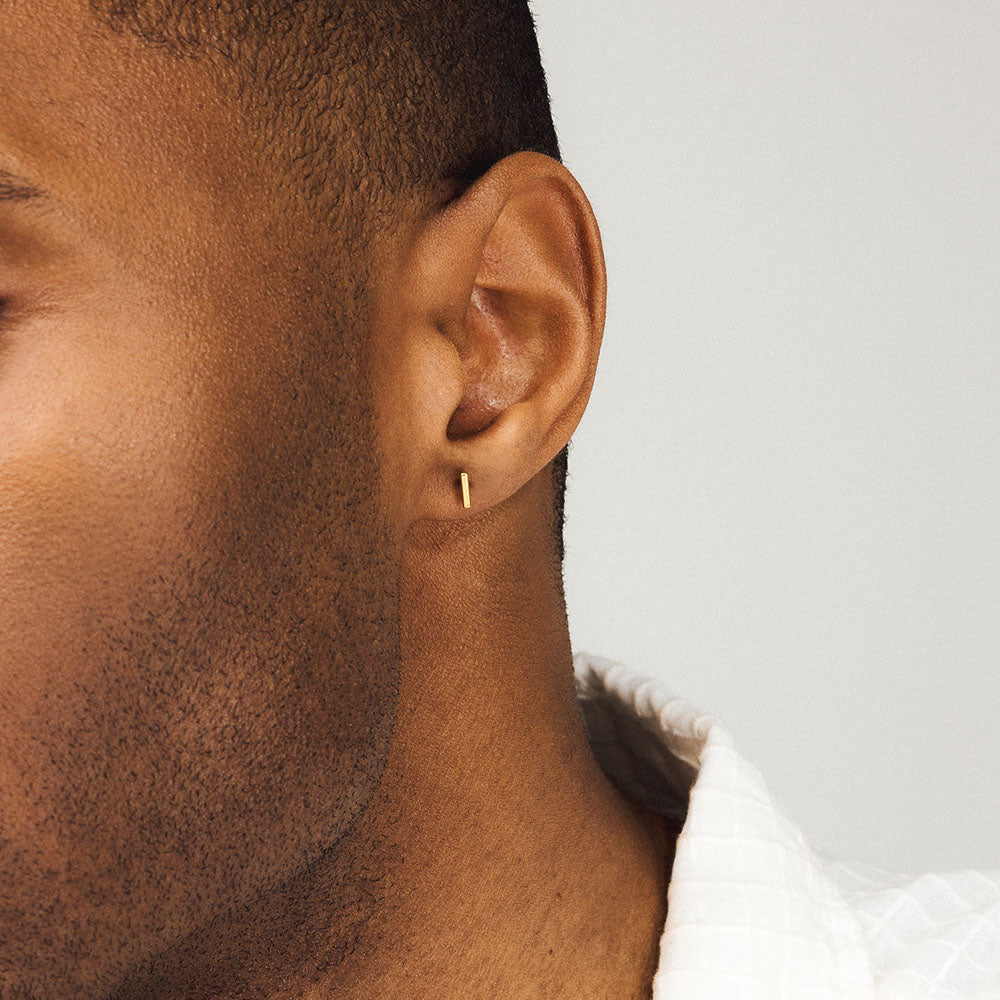
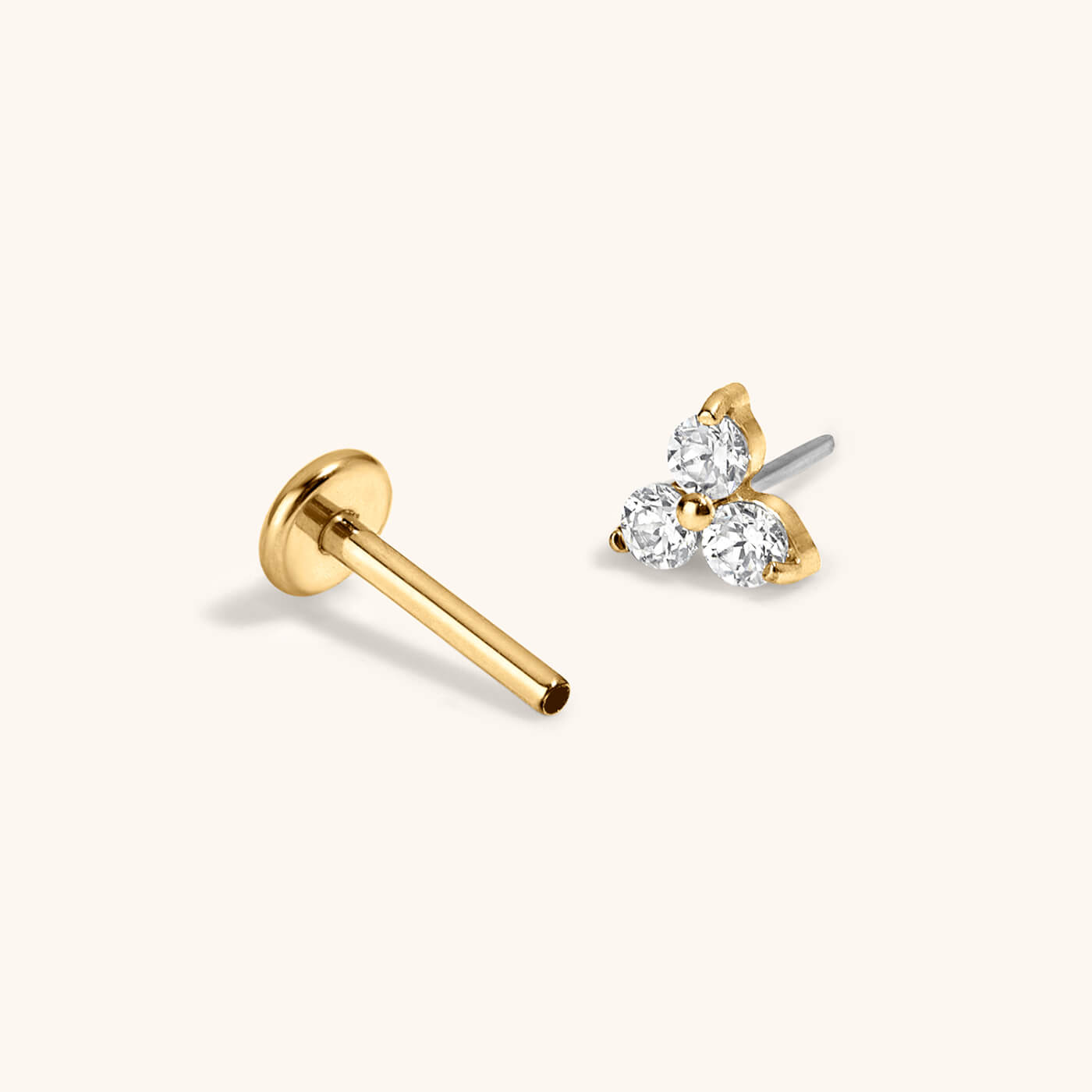
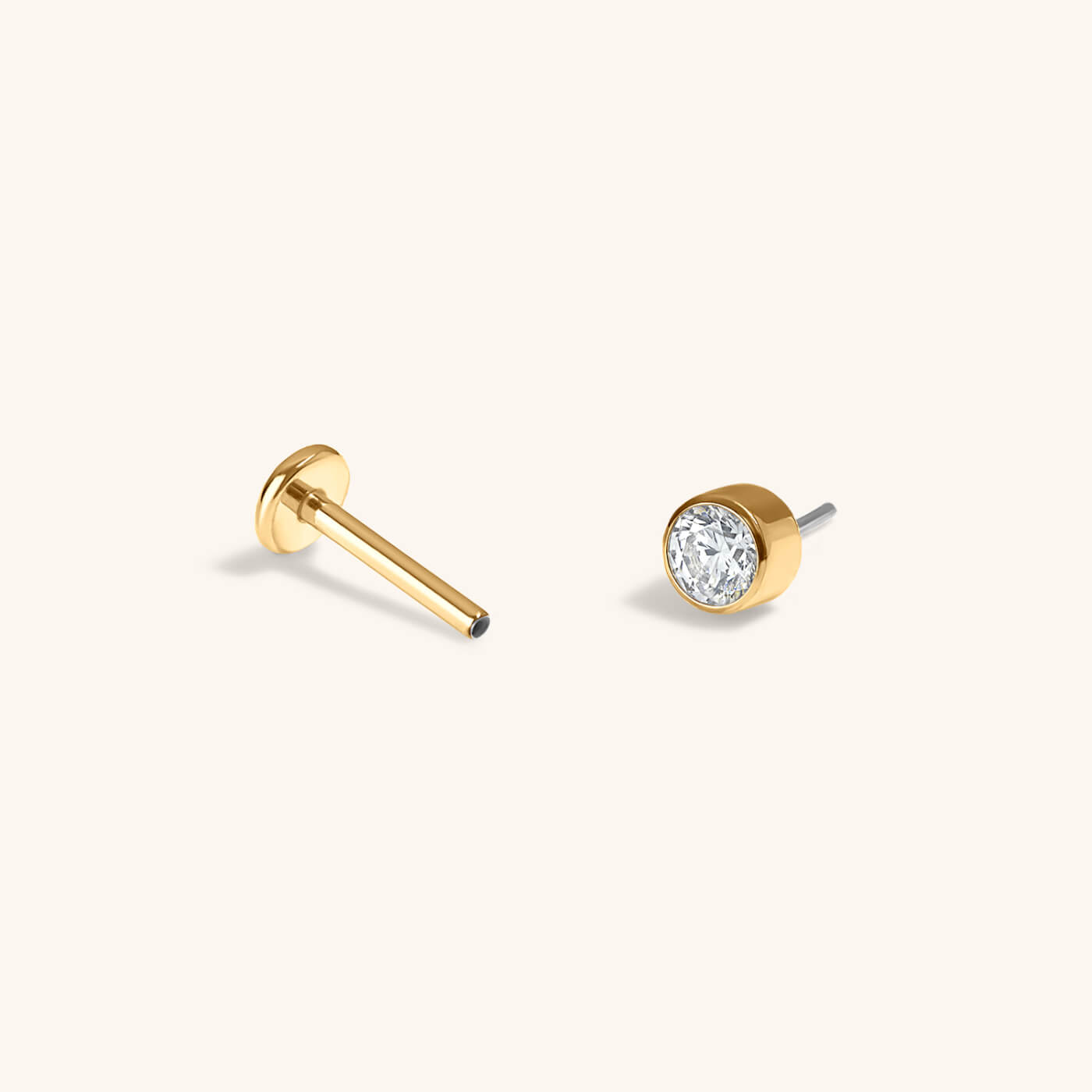
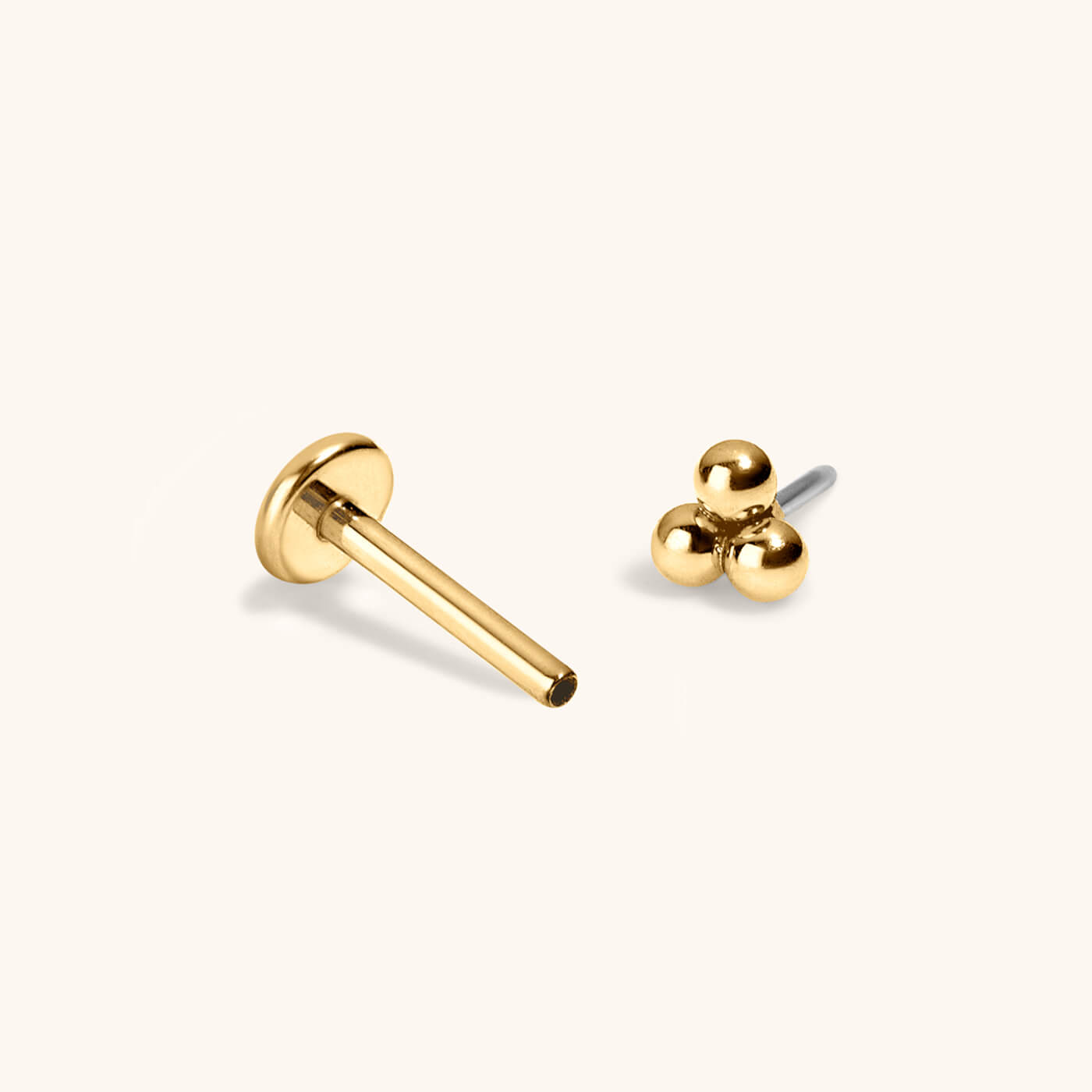
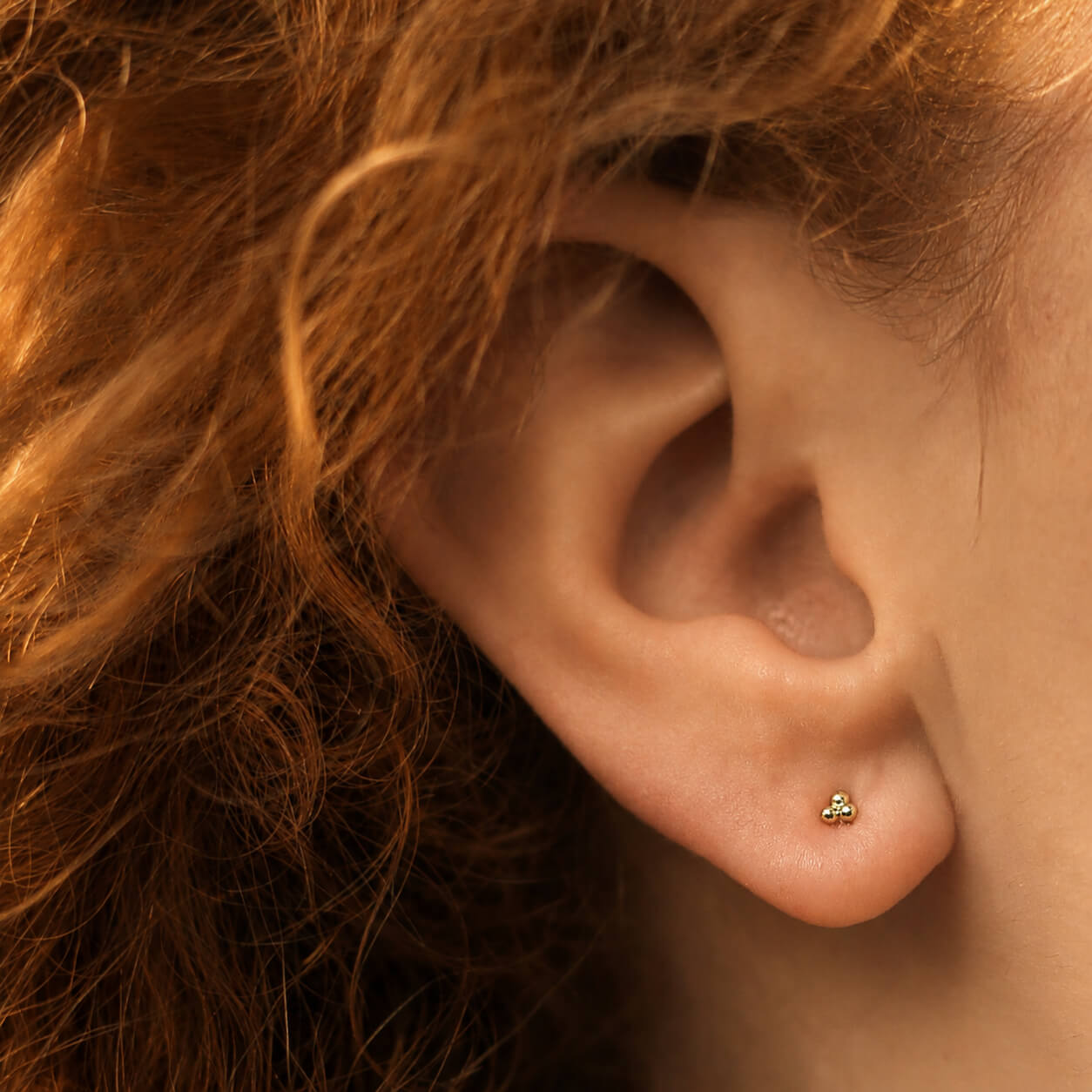
Flat back studs are the forward helix's jewelry. The rim is narrow and the piercing faces forward, so a small stud with a flat disc behind it sits close to the ear, protrudes far less than a butterfly back, and shows its front to the world. Check that the arm of your glasses clears it; whether it does depends on your placement and your frames. A push pin flat back slides in without threading, which matters in a spot this awkward to reach in a mirror; our guide to how to wear flat back earrings walks through putting one in. Keep the front small: a 2mm to 3mm sphere, a tiny crystal, or a slim bar is the scale that suits the space.
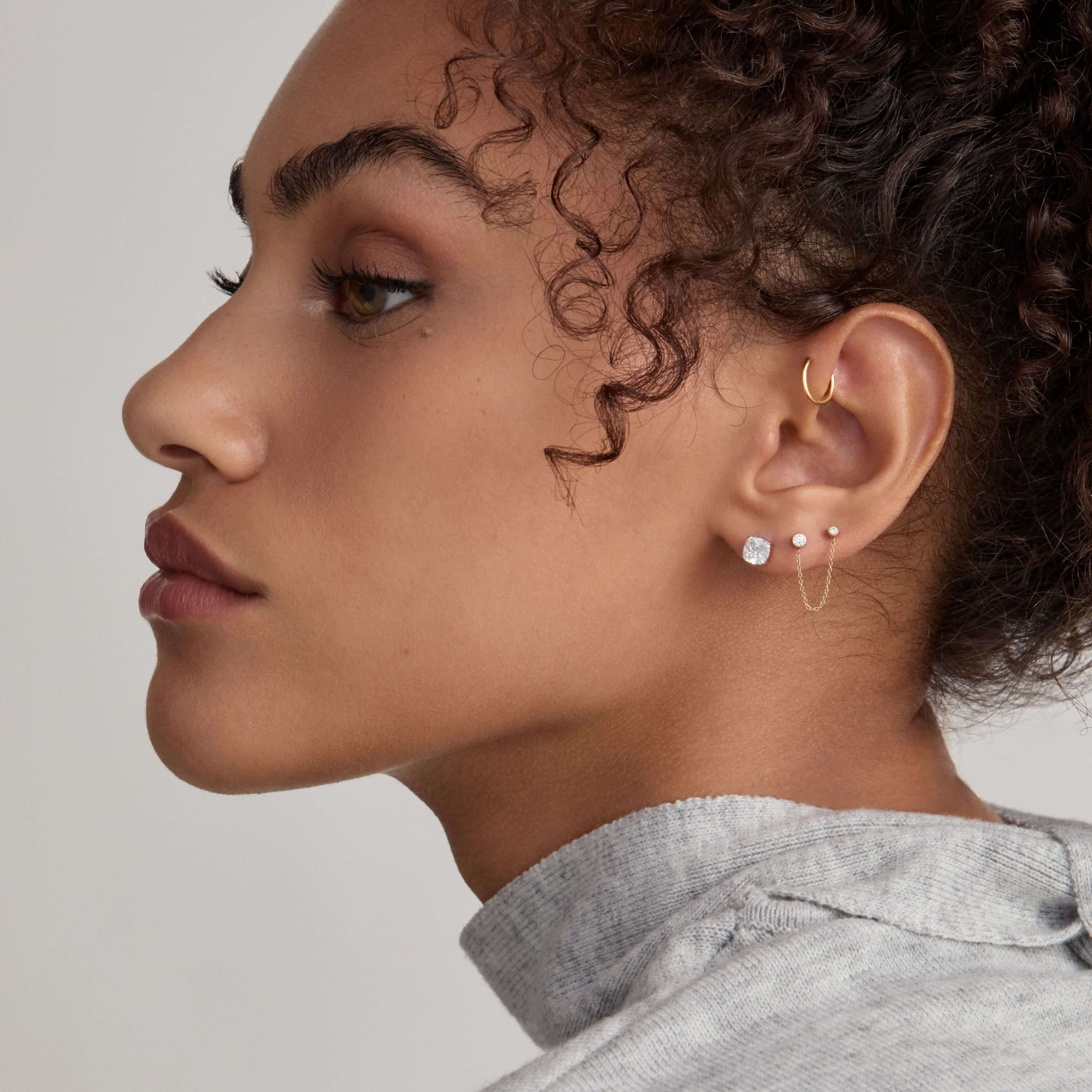
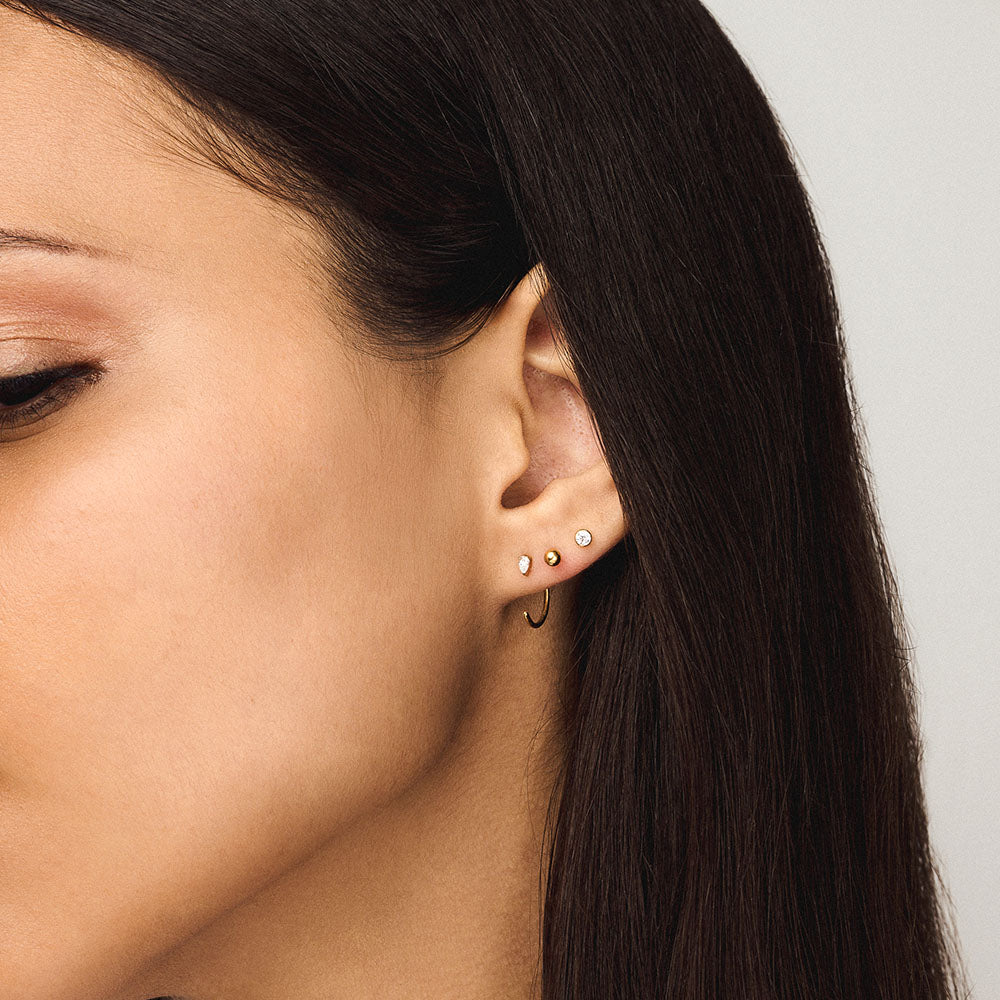
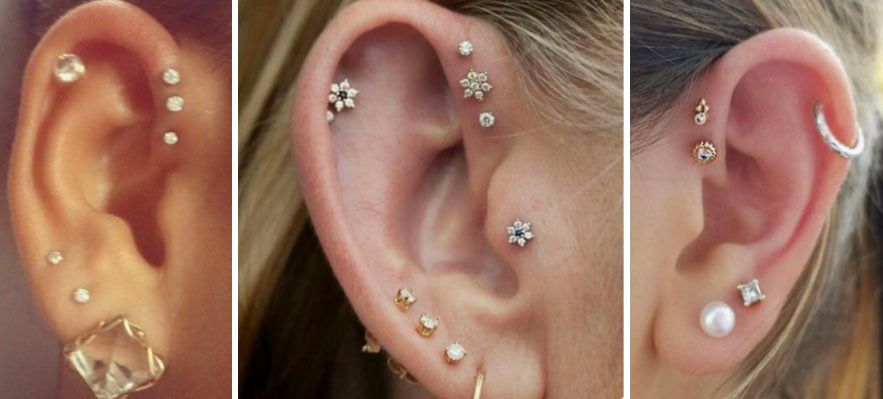
Double and triple forward helix stacks are where this piercing gets fun. Three matching studs in a row is the classic; a graduated set, or one accent stud among two plain ones, reads as more considered. Your piercer will space them so each has enough cartilage around it.
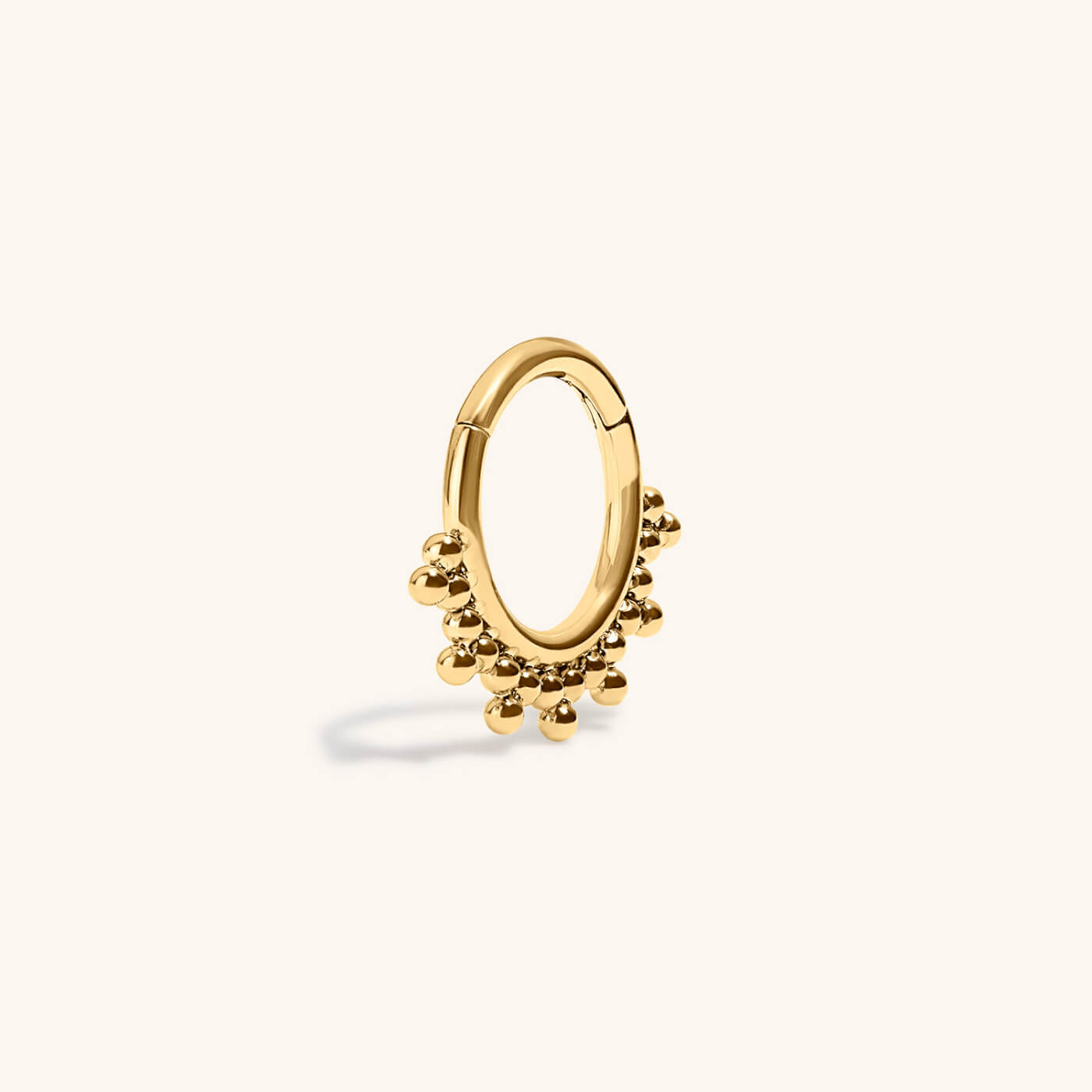
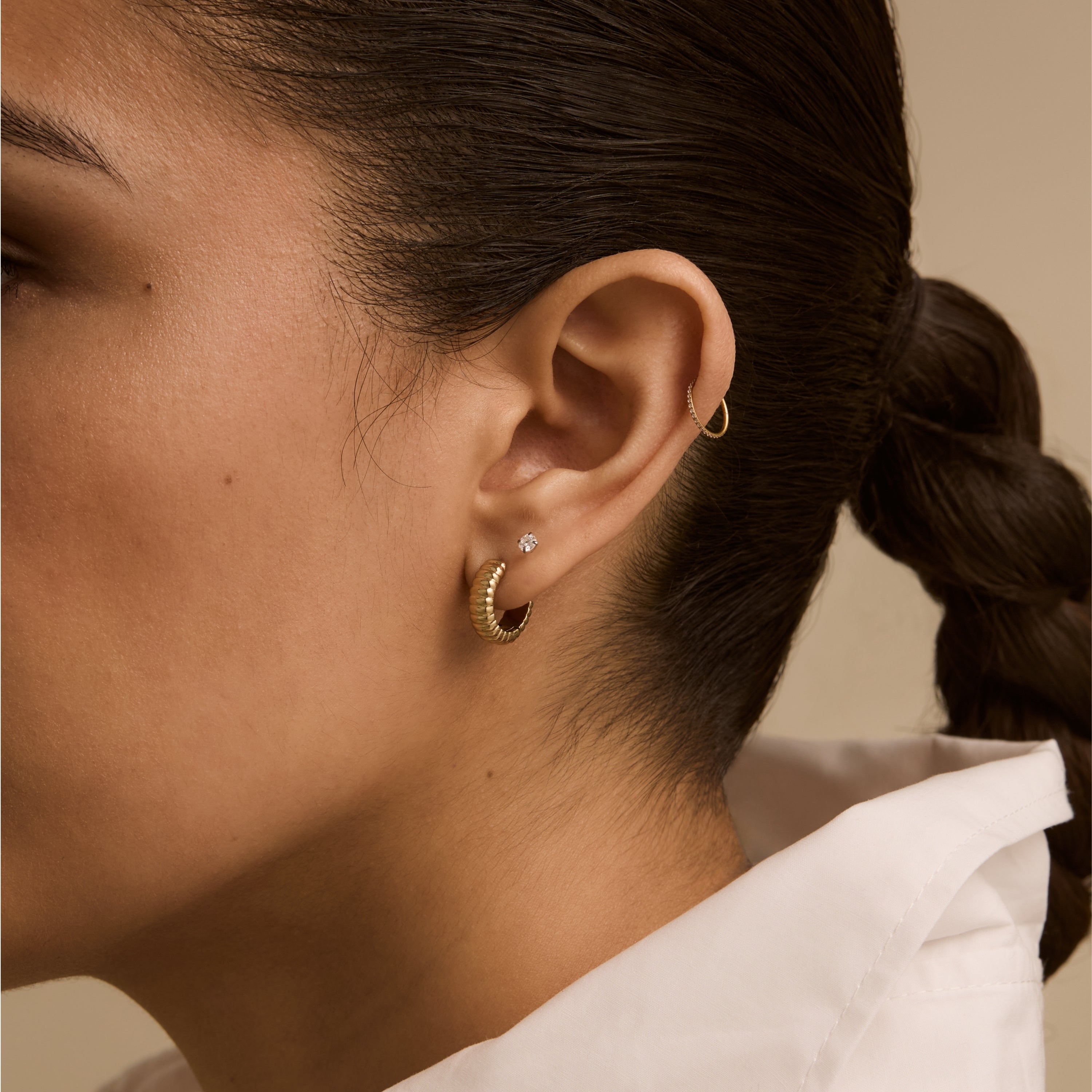
Hoops are possible but not the default. A tiny cartilage hoop can look sharp here once healed, but it moves, and the forward helix is one of the easier spots to irritate, so treat it as a healed-piercing option.
Everything in our forward helix collection is made from medical-grade (ASTM F-136) titanium or solid 14k gold, both hypoallergenic and nickel-free, so you can wear it around the clock, through showers and sleep.
Shop forward helix piercing jewelry


Double and Triple Forward Helix
The forward helix rim is long enough on many ears for two or three piercings in a row. Piercers usually do them in one session so the spacing is even, but they can be added over time as the first one heals.
Forward Helix Piercing Inspiration
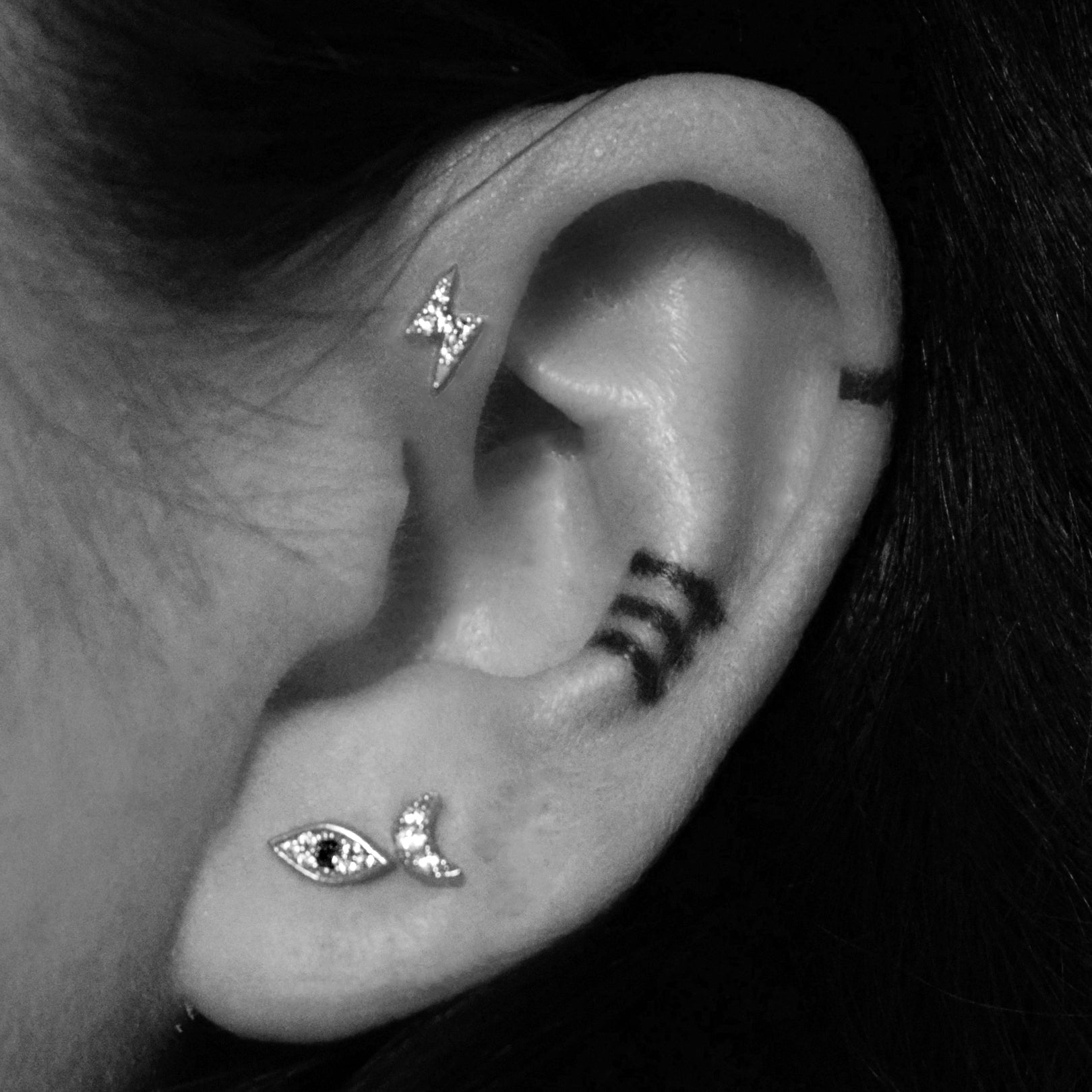
@heykellyd in our Evil Eye Nap Earrings, Pave Moon Nap Earrings, and Pave Lightning Nap Earrings
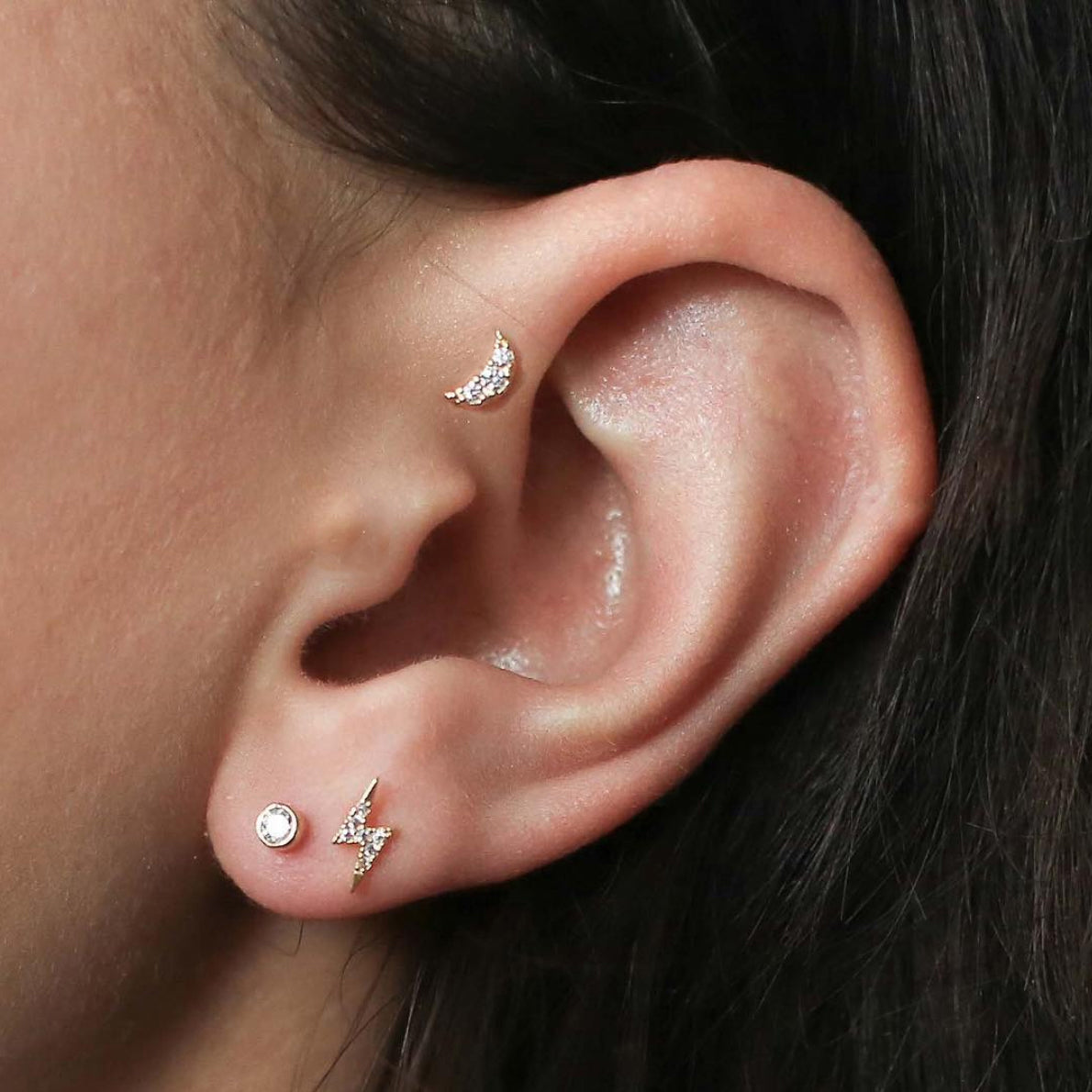
Our Pave Lightning Stud, Tiny Crystal Stud, and Pave Moon Flat Back Earring
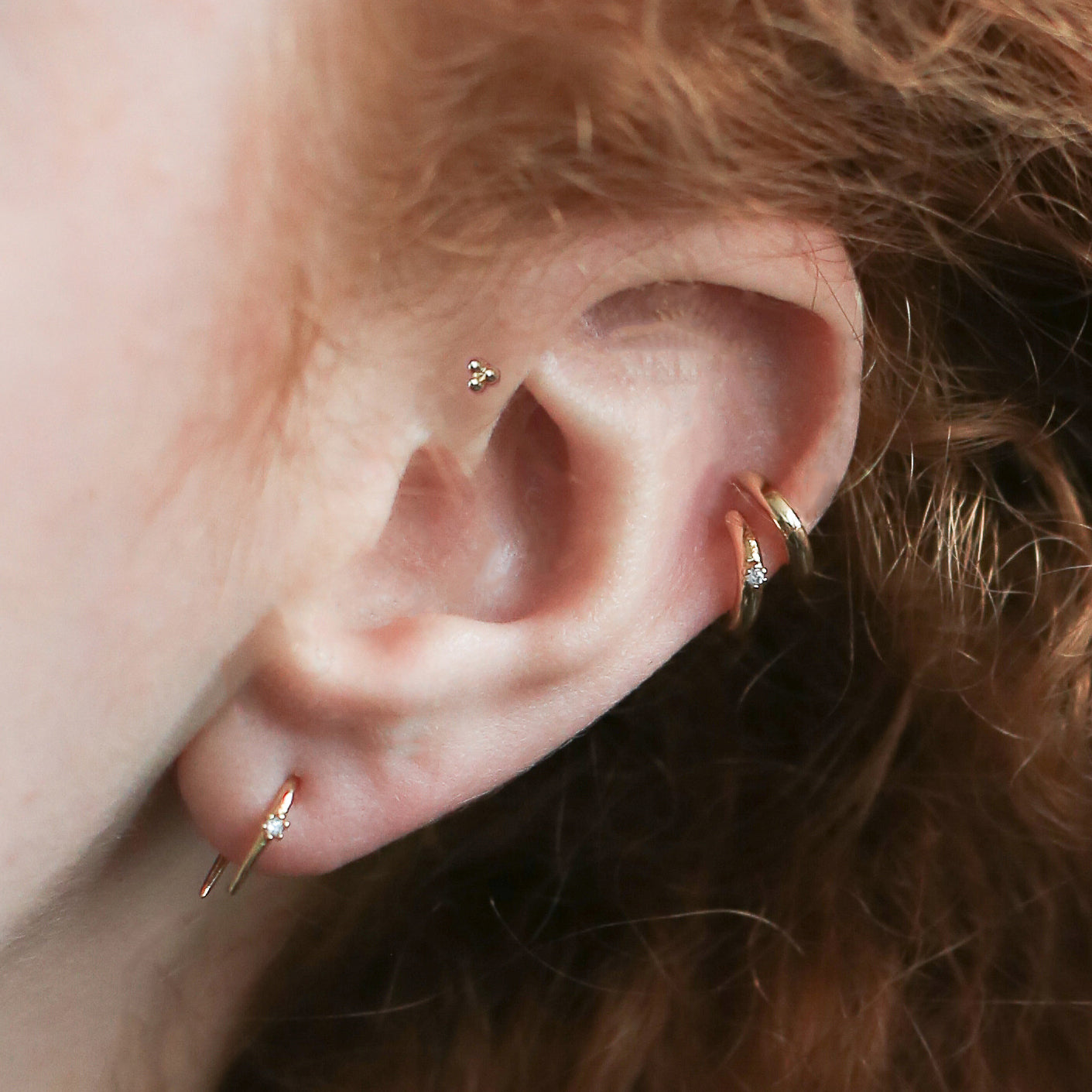
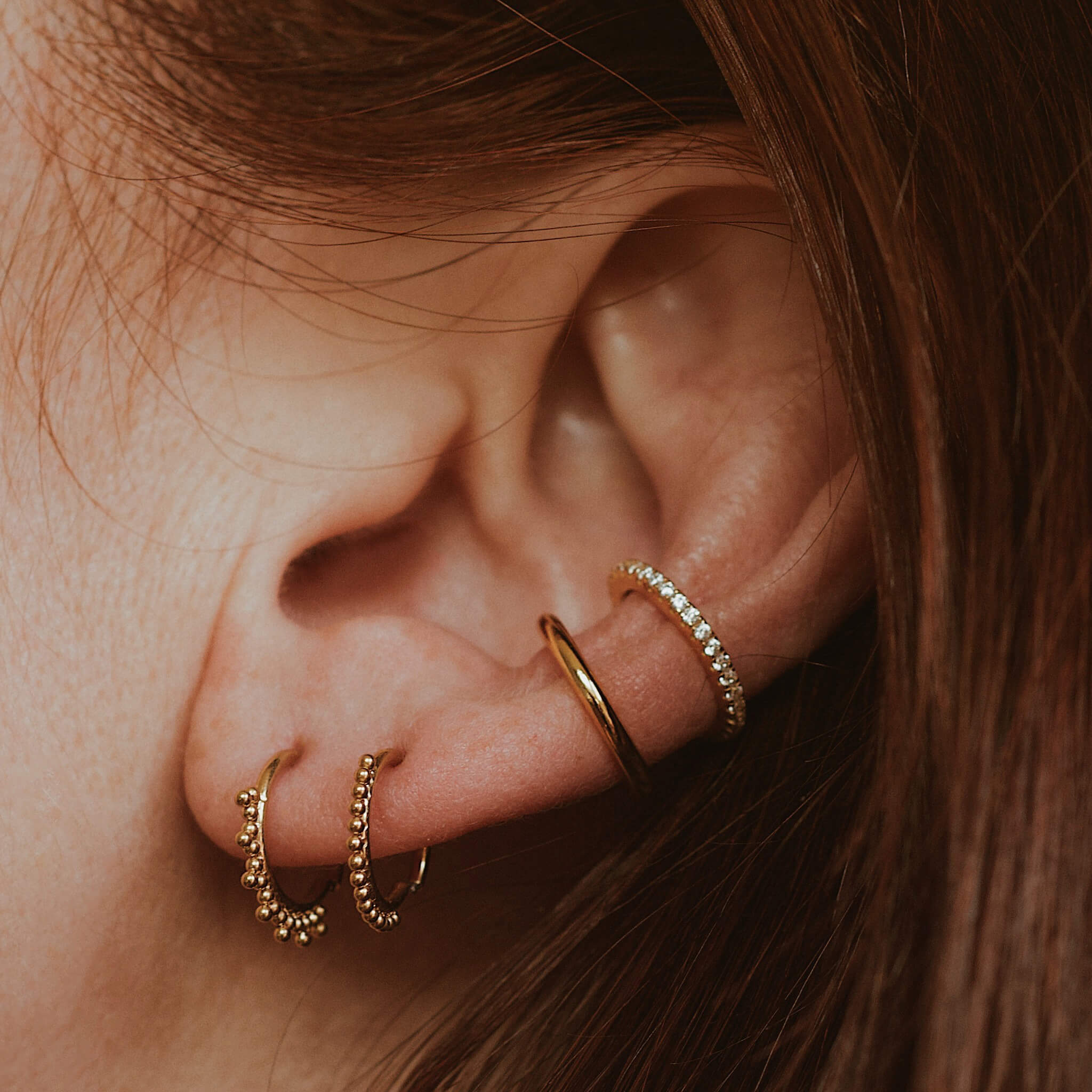
Our Shooting Star Open Hoop Earring, Classic Arc Ear Cuff, and Tiny Trinity Flat Back Earring
Keep Reading
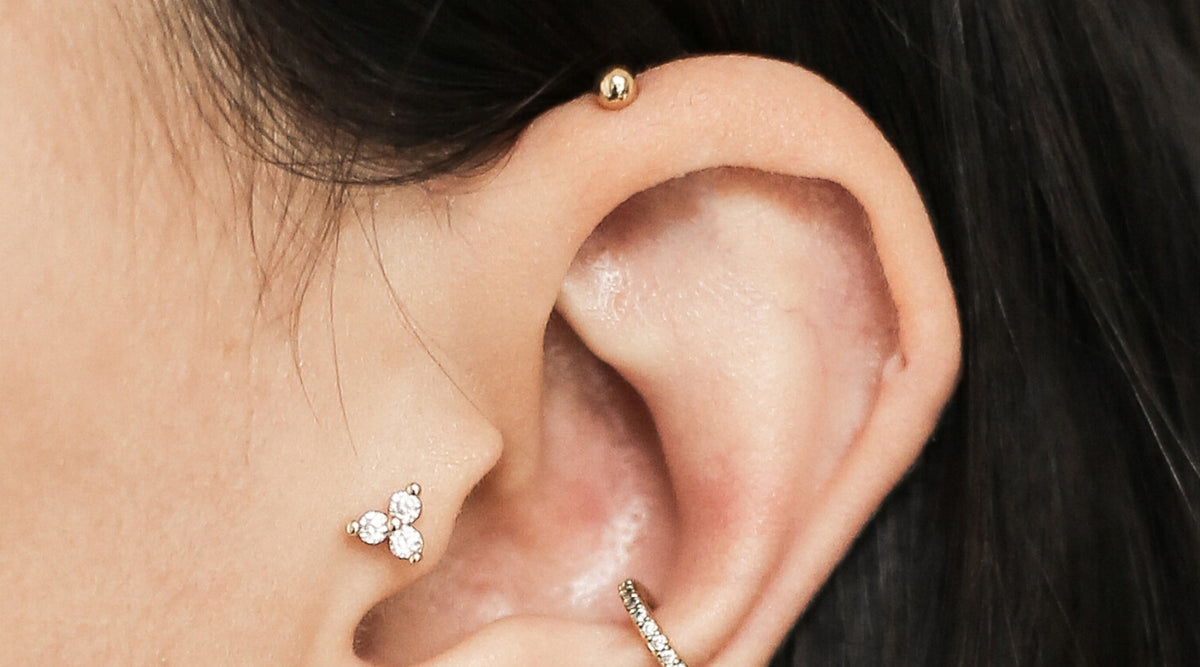
How to Wear Flat Back Earrings
How flat back earrings work, how to put them in, and what size to get for your lobes and cartilage.
Read more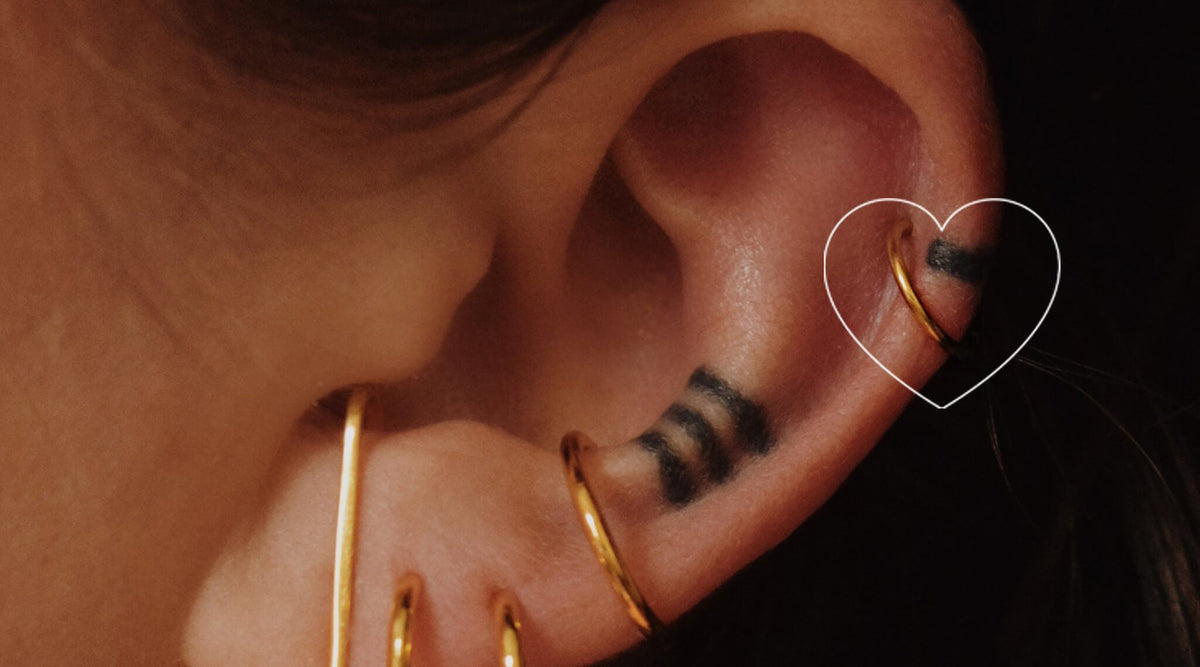
Helix Piercing Guide: Everything You Need to Know
Everything you need to know about helix piercings: pain level, healing time, cost and recommended jewelry.
Read more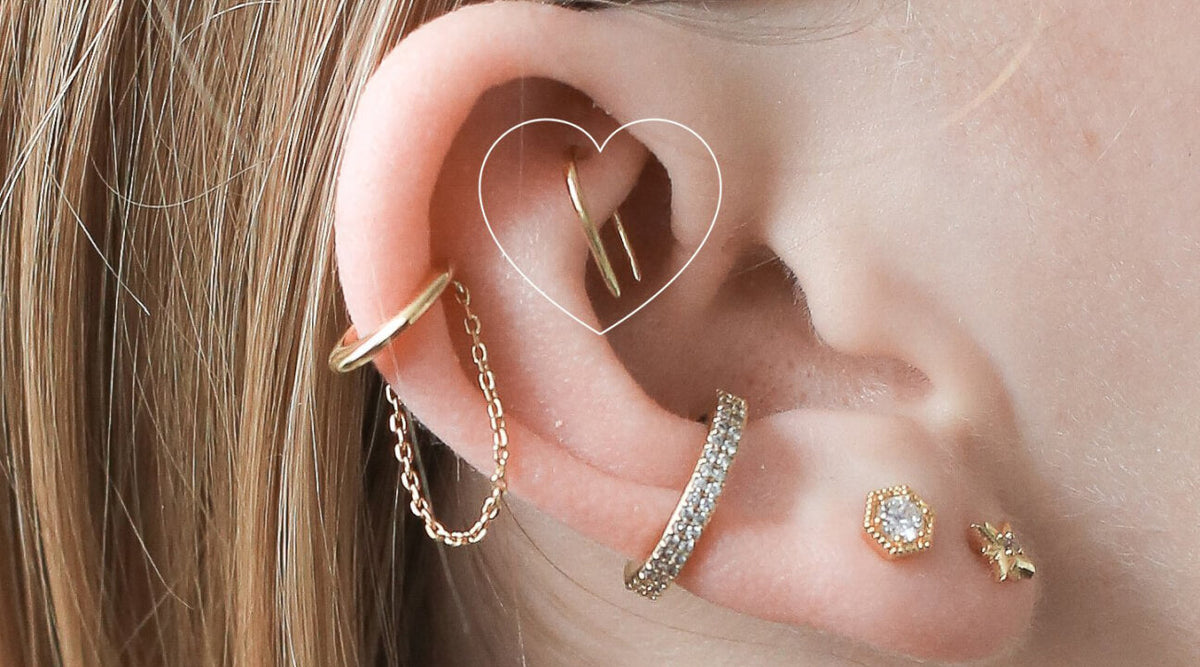
Rook Piercing Guide: Everything You Need to Know
Everything you need to know about rook piercings: pain level, healing time, cost and recommended jewelry.
Read more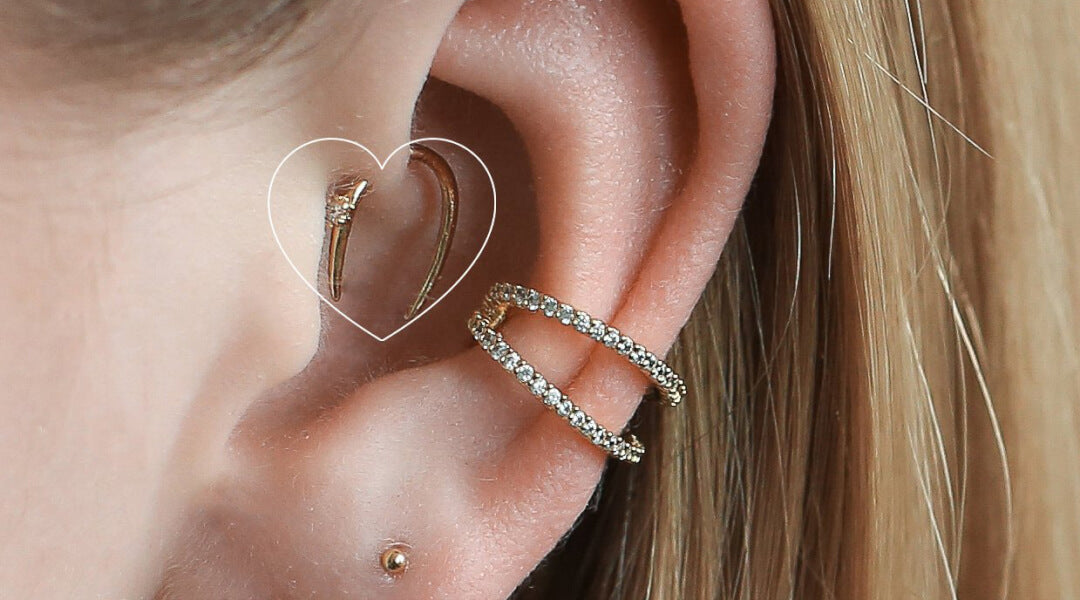
Daith Piercing Guide: Everything You Need to Know
Everything you need to know about daith piercings: pain level, healing time, cost and recommended jewelry.
Read more