

Best Earrings for New Piercings: What Jewelry to Get Pierced In
The best earrings for a new piercing are simple studs in medical-grade (ASTM F-136) titanium or solid 14k gold, with a flat back and a post long enough to leave room for swelling. Your piercer chooses and puts in that first piece, so the most important choice you make is the studio.
This guide covers what earrings piercers use, what to look for in starter earrings, which metals and styles to avoid while you heal, and when you can switch to the earrings you really want. When you're ready, our flat back earrings are made for nonstop wear once your piercing has healed.
Starter Earrings at a Glance
- METAL: Medical-grade (ASTM F-136) titanium, the implant-grade standard, or solid 14k or 18k gold that is nickel- and cadmium-free.
- STYLE: A simple stud with a flat back. Threadless (push pin) or internally threaded, never a butterfly back.
- POST LENGTH: Longer at first to allow for swelling. Your piercer can swap it for a shorter post once swelling goes down.
- GAUGE: Whatever you were pierced with. Lobes are often 20 gauge (0.8mm) or 18 gauge (1.0mm); cartilage is usually 16 gauge (1.2mm).
- HEALING: About 6 to 10 weeks for a lobe, and several months to a year for cartilage.
- WHO PUTS THEM IN: A professional piercer, using a needle rather than a piercing gun.
What Earrings Do Piercers Use?
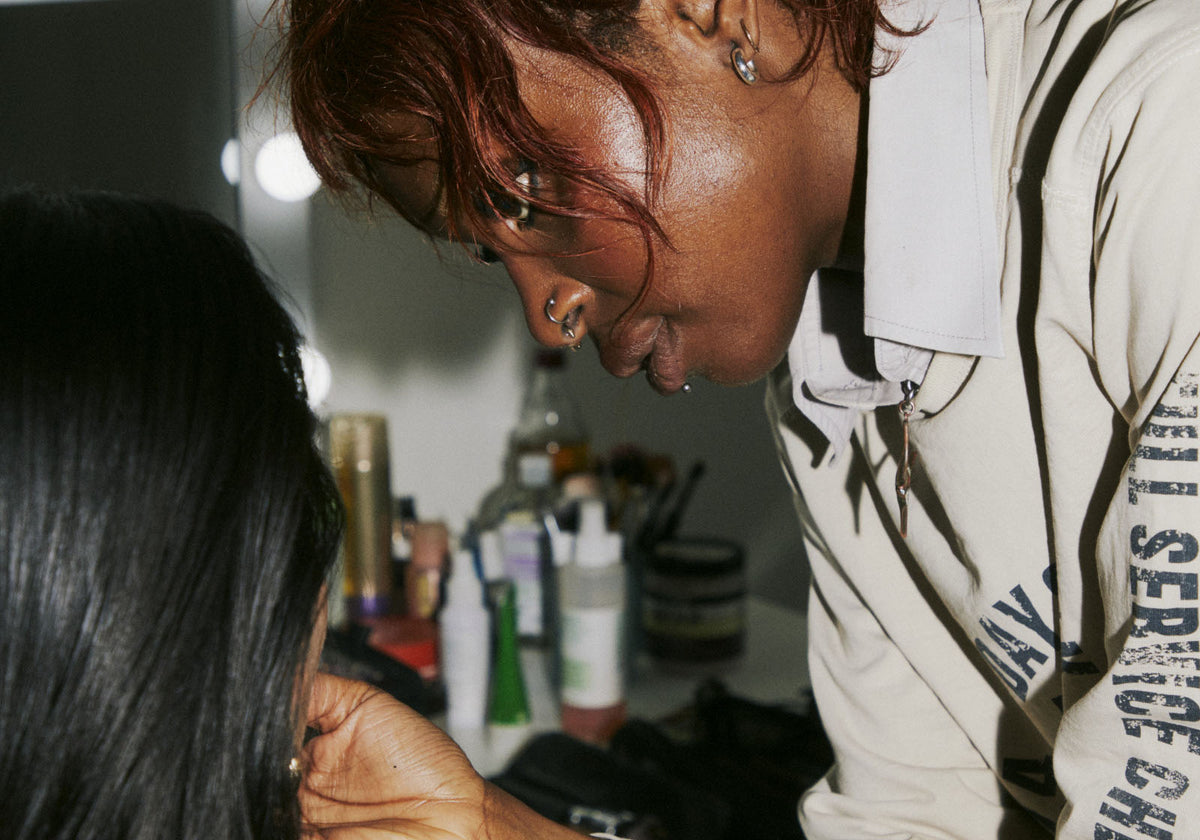
Professional piercers pierce with a hollow needle and then insert jewelry from their own sterilized stock. Studios that follow the Association of Professional Piercers (APP) guidelines for initial jewelry use:
- Implant-certified titanium (ASTM F-136 or ISO 5832-3), or commercially pure titanium (ASTM F-67).
- Solid 14k gold or higher, nickel- and cadmium-free, and alloyed for use in the body.
- Implant-certified steel (ASTM F-138), niobium, or platinum, which some studios also carry.
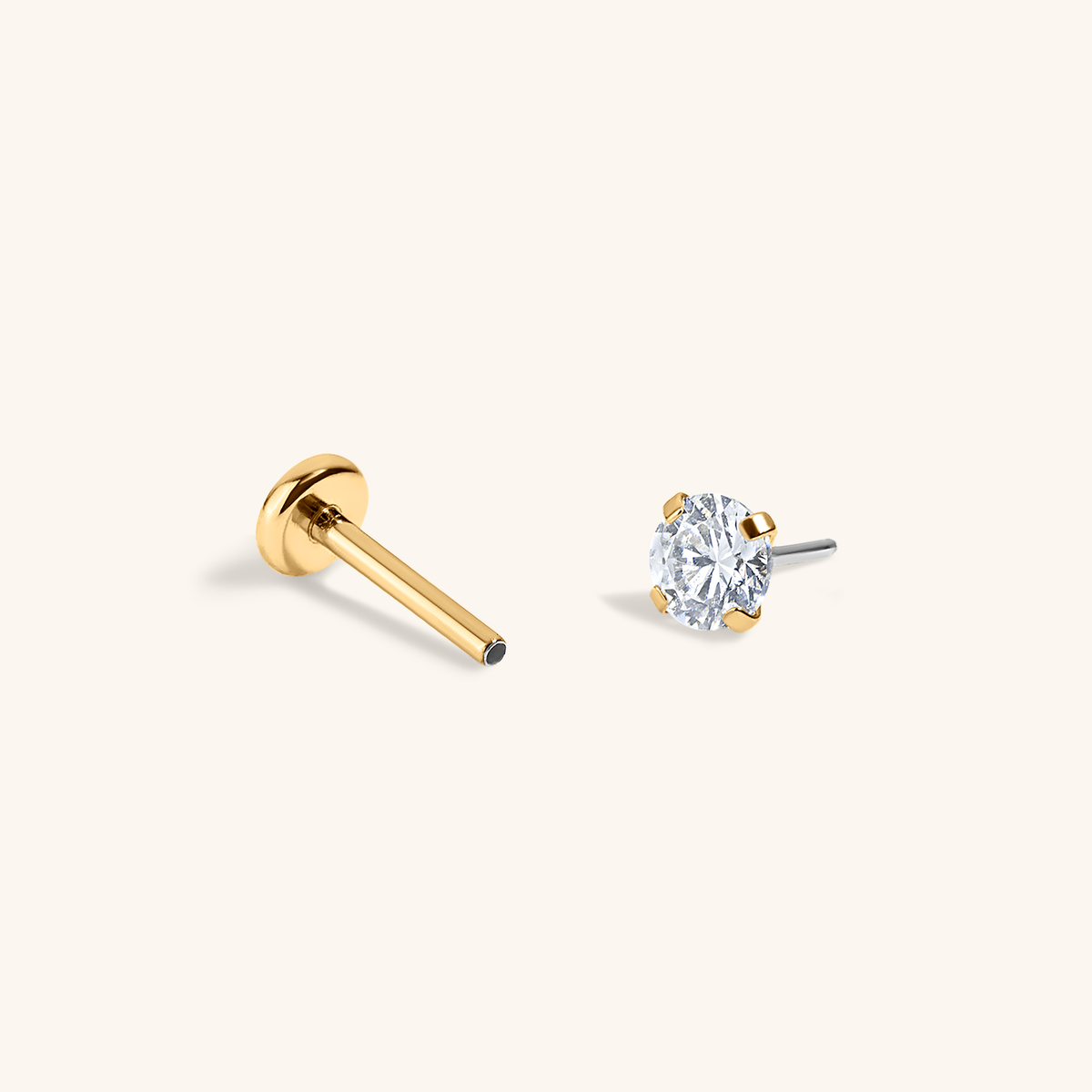
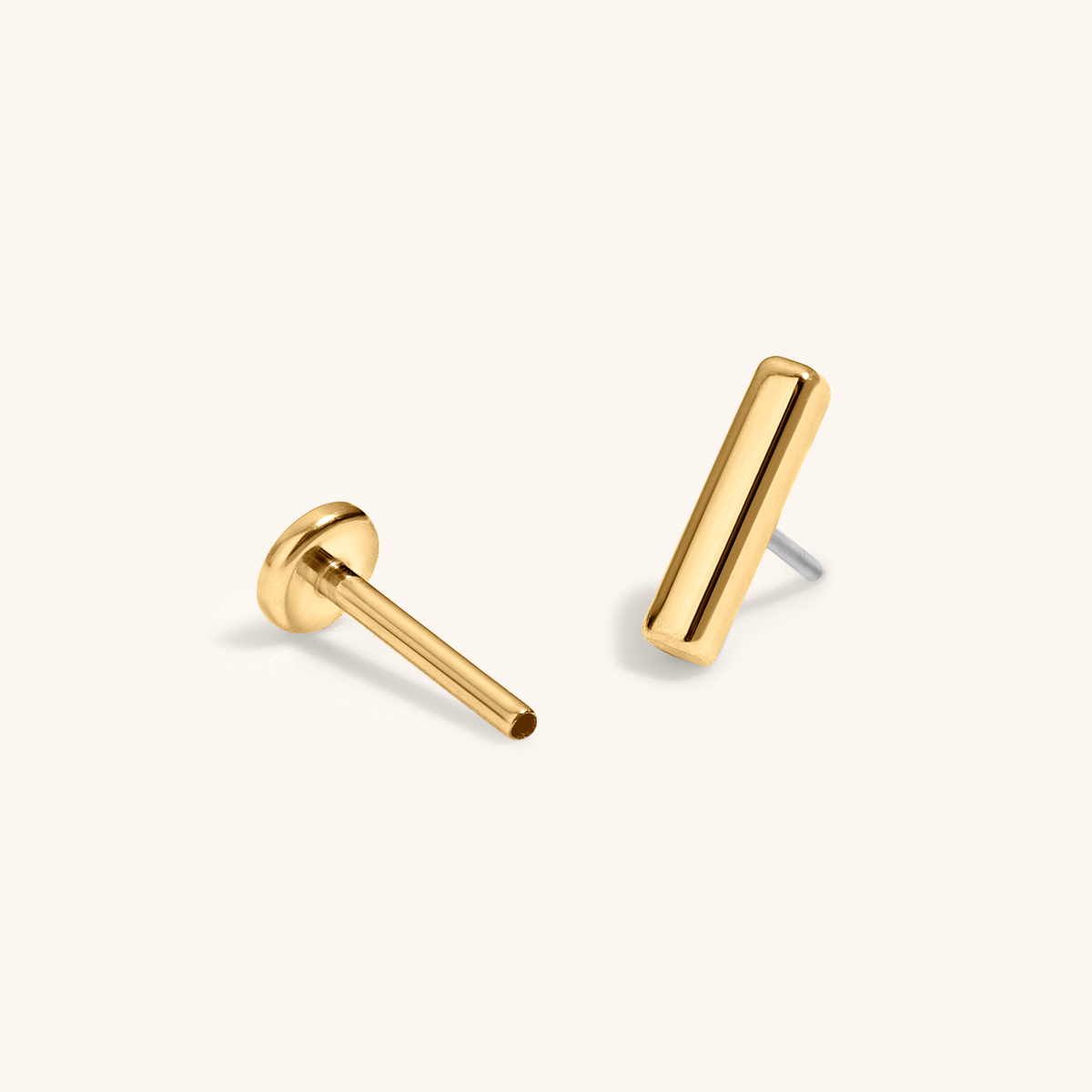
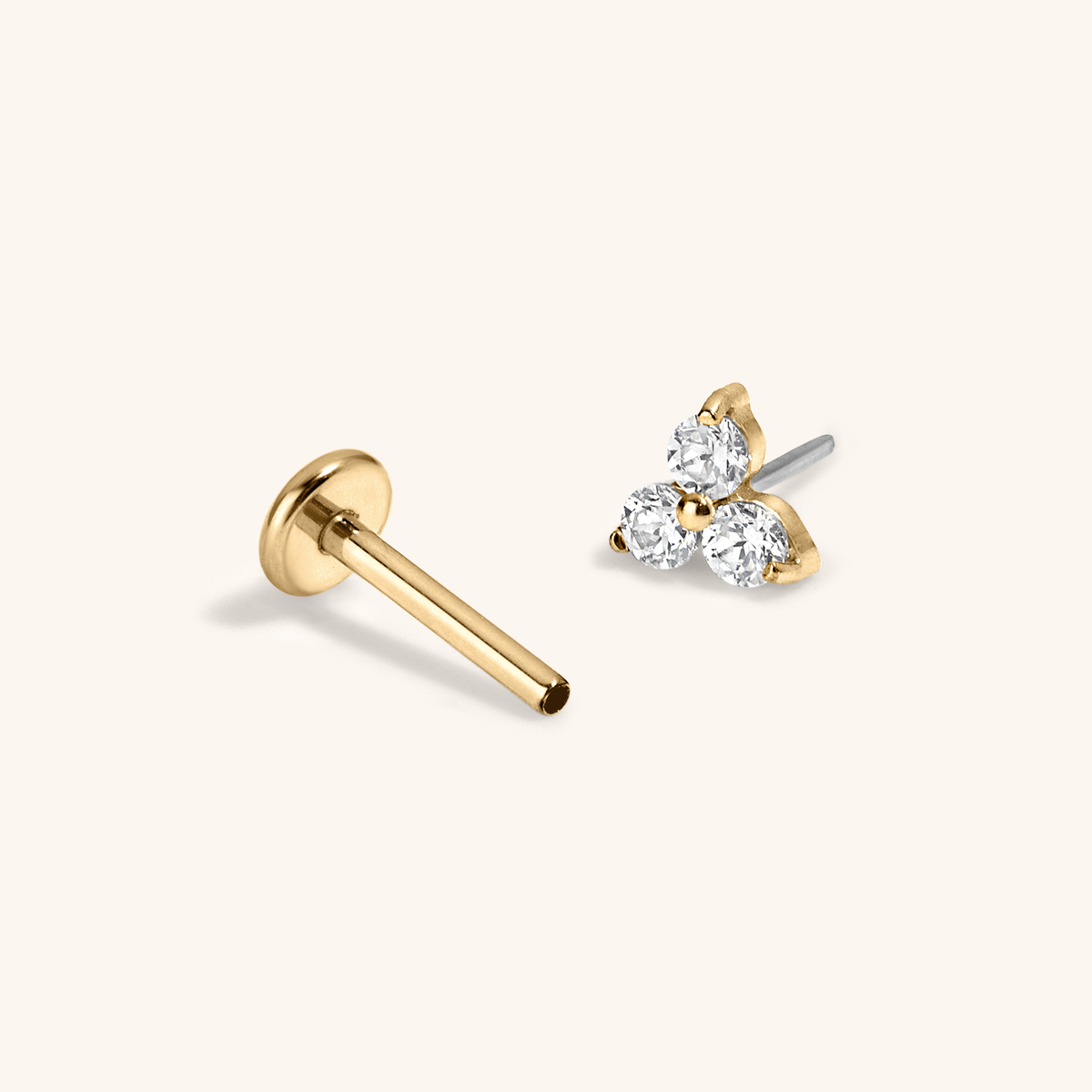
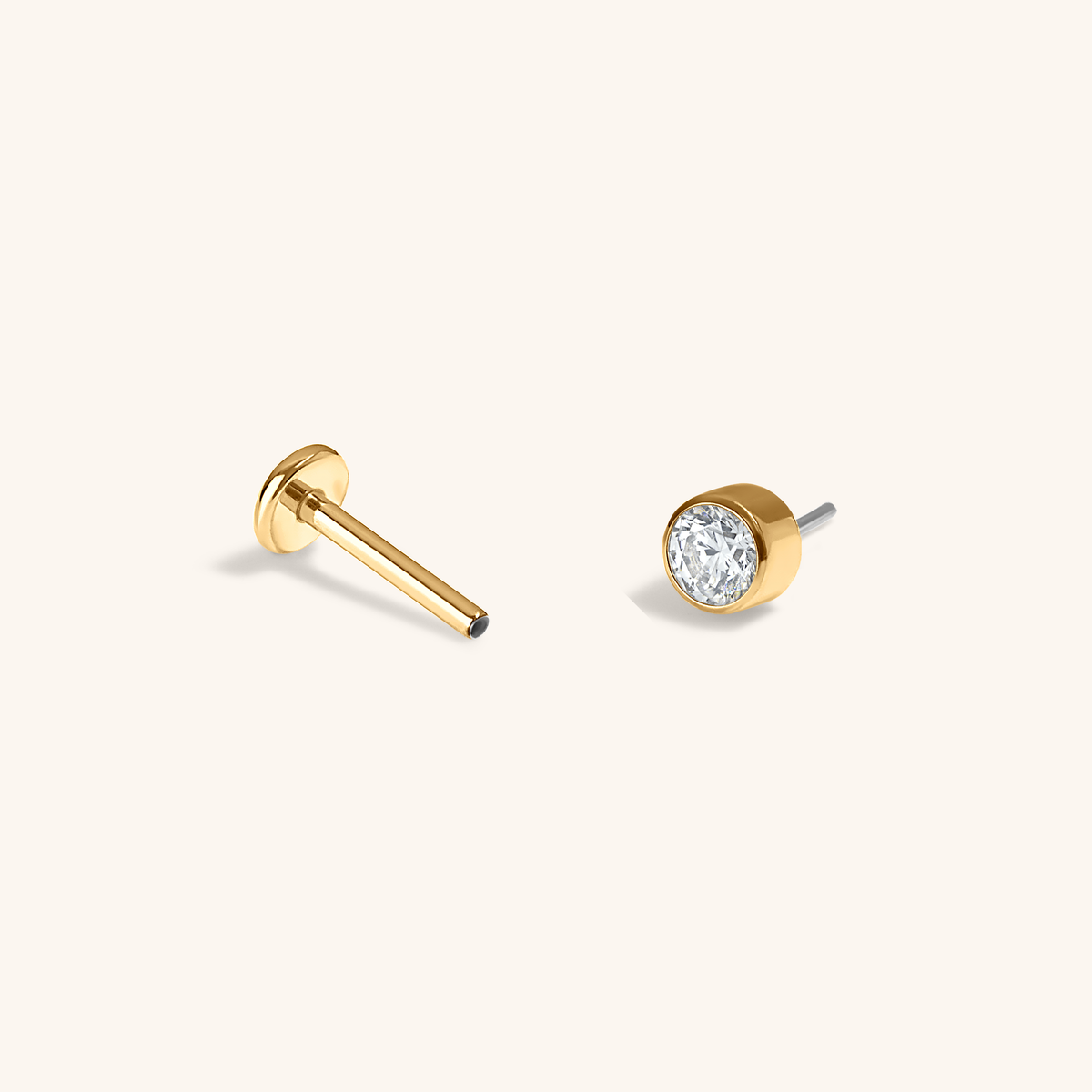
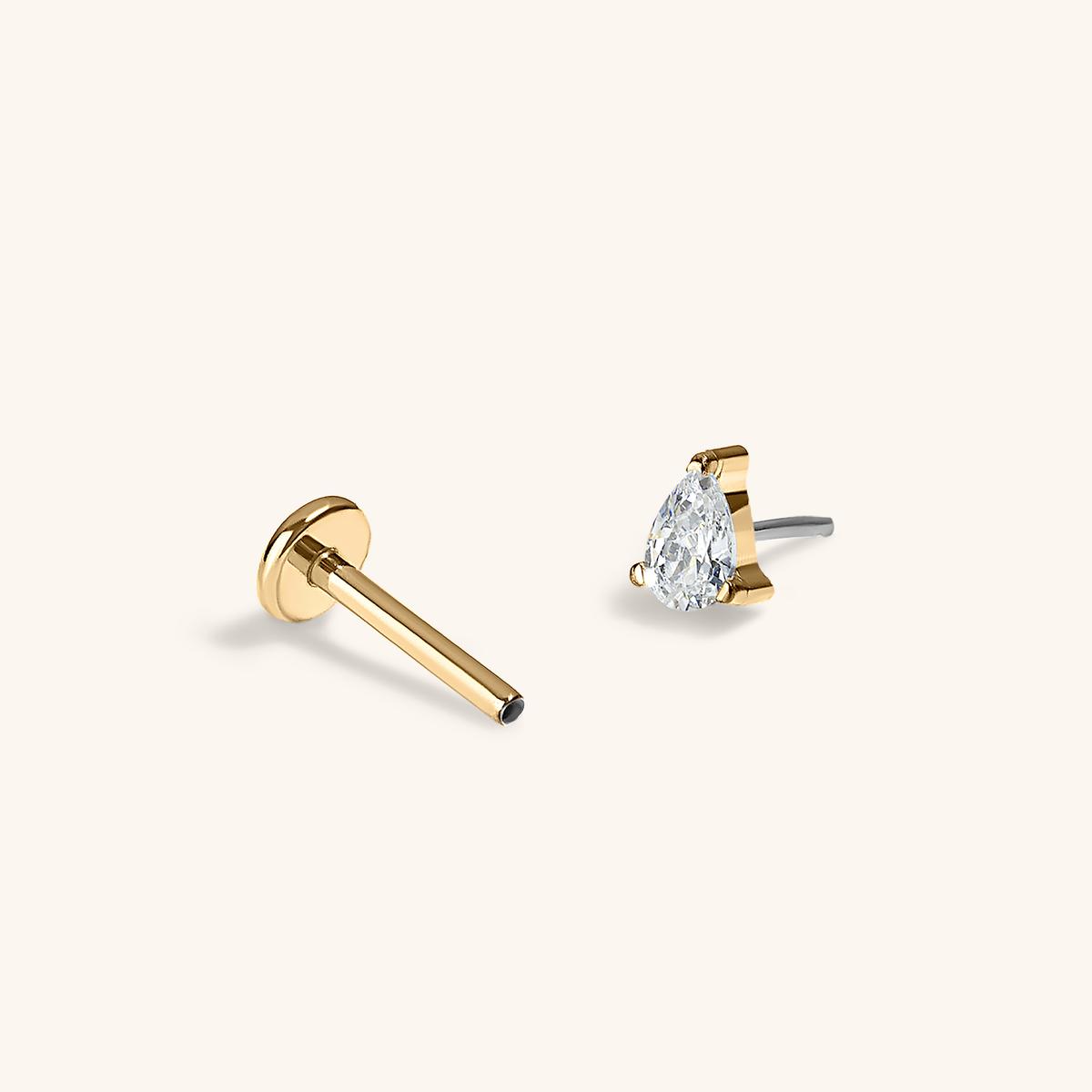
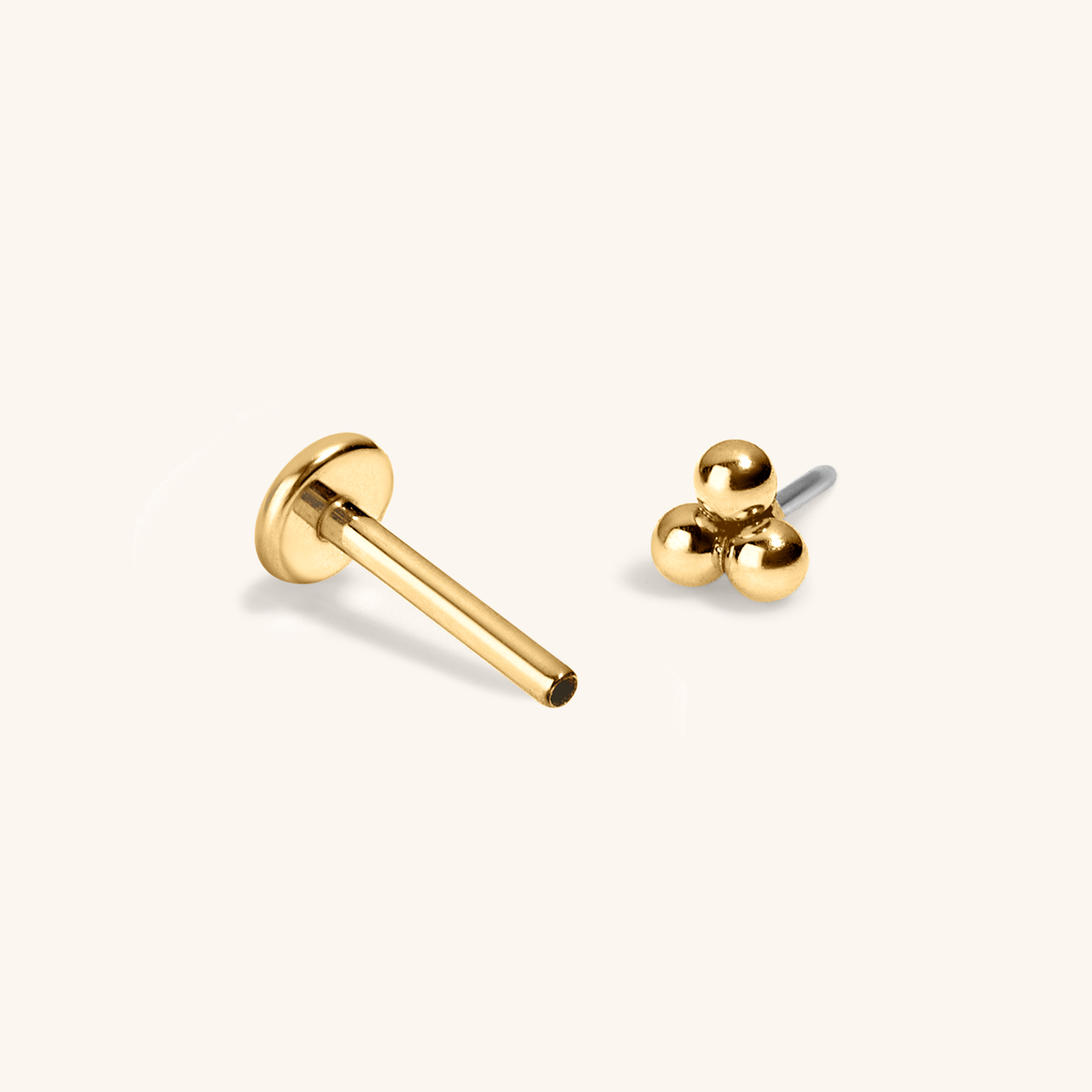
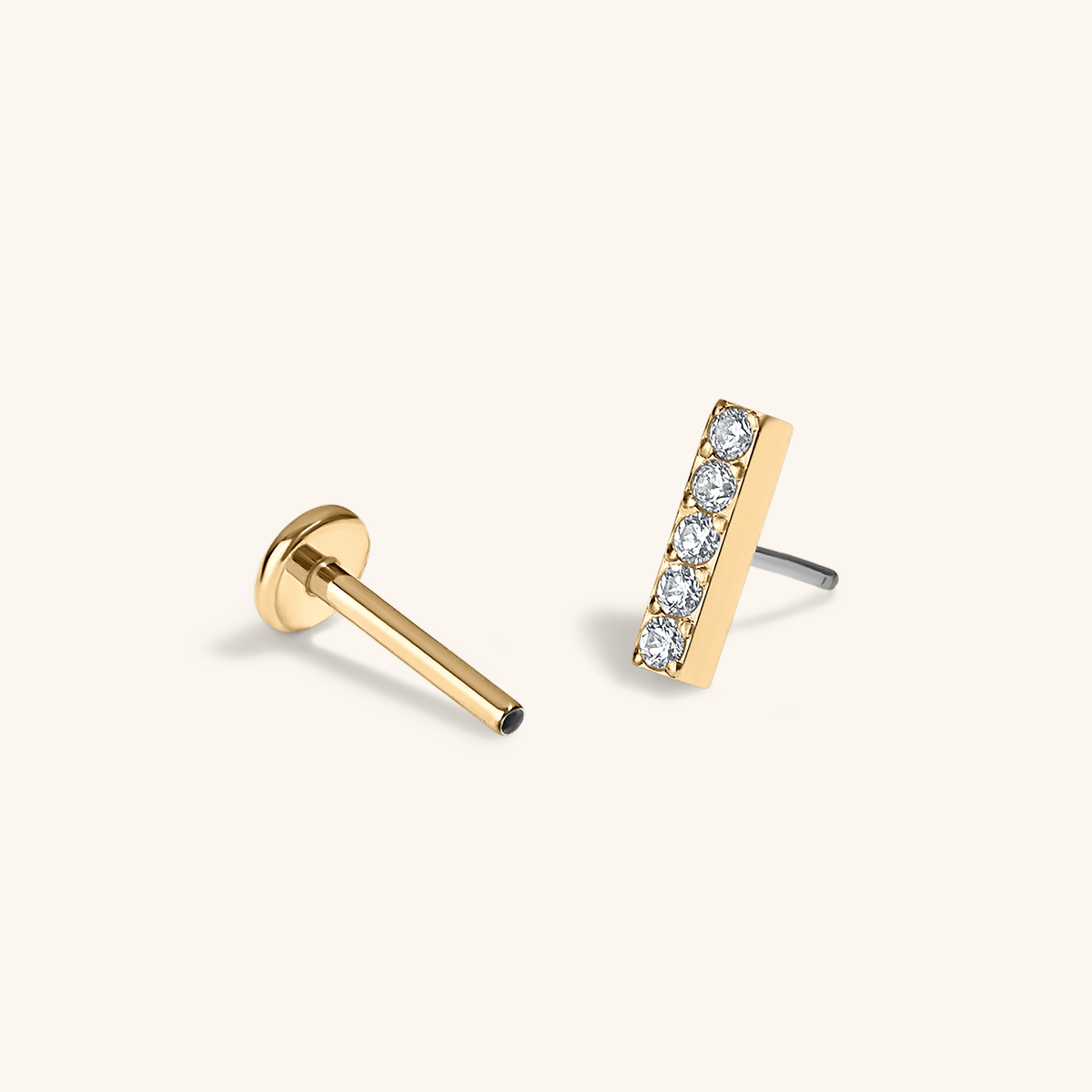
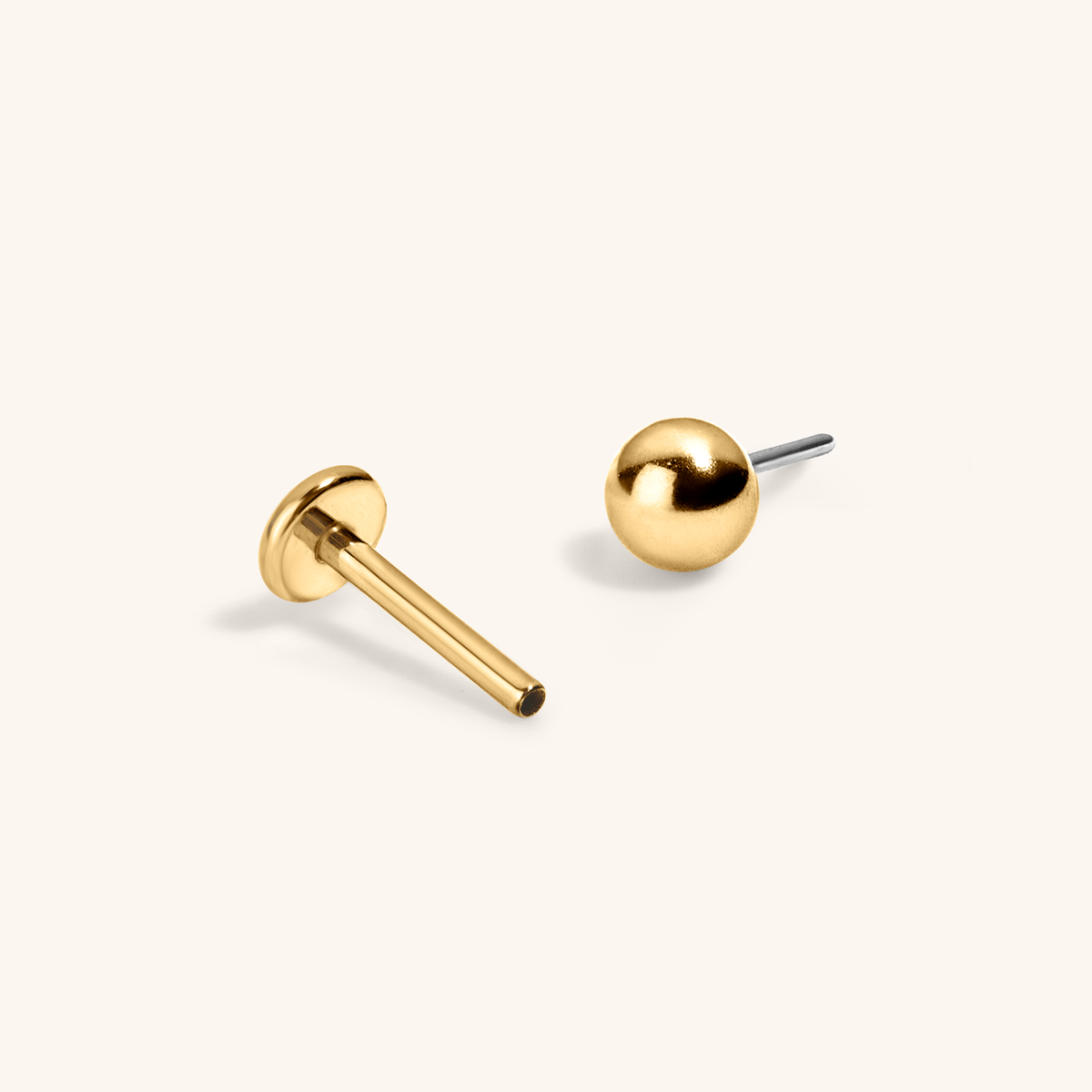
The jewelry itself is usually a flat back stud, sometimes called a labret, with a threadless (push pin) or internally threaded post, so nothing rough passes through the fresh piercing. Starter posts are a little longer than you'll eventually want, which gives the piercing room to swell.
Piercing guns are different. They push a blunt stud through the ear in one motion, use butterfly backs that trap debris, and can't be fully sterilized. Professional piercers don't use them, and the starter studs they come with aren't designed for long-term healing.
Best Earrings for Newly Pierced Ears
Whether it's your first piercing or your fifth, look for the same things in a starter earring:
- The right metal. Titanium or solid gold, as above. A lower price usually means plated or mixed metal, which isn't meant for a fresh piercing.
- A flat back. A flat disc sits flush against the back of your ear, so it's less likely to snag on towels, pillowcases, or hair. While you heal, try to sleep on the other side. Butterfly backs press into the skin and collect buildup.
- A smooth, simple top. A small bezel stone, sphere, or polished shape is easier to keep clean than prongs, open settings, or dangling charms, which catch and pull while you heal.
- A highly polished surface. Scratches and nicks can irritate a healing piercing. Good starter jewelry has a mirror finish.
- A good fit. The post should be long enough for swelling and the gauge should match your piercing. Your piercer will size this for you.
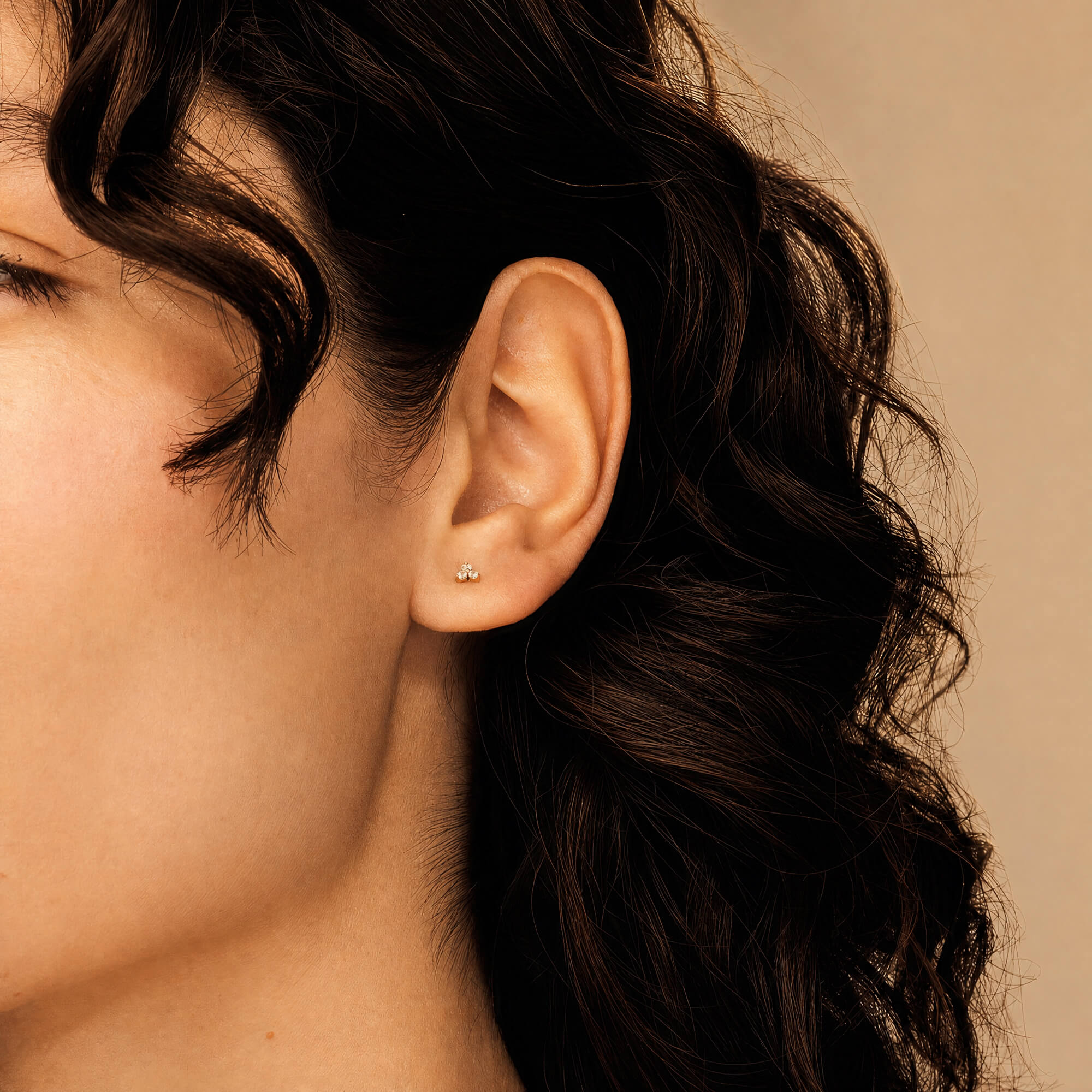
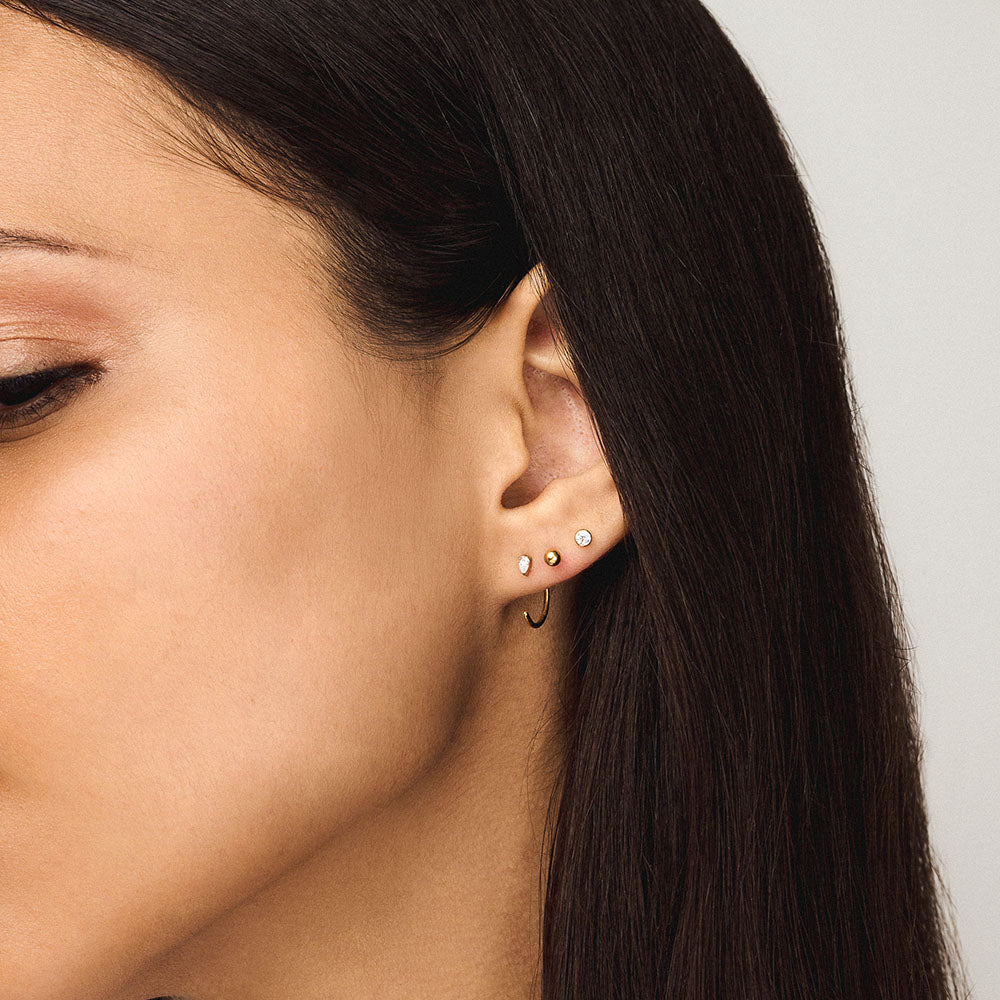
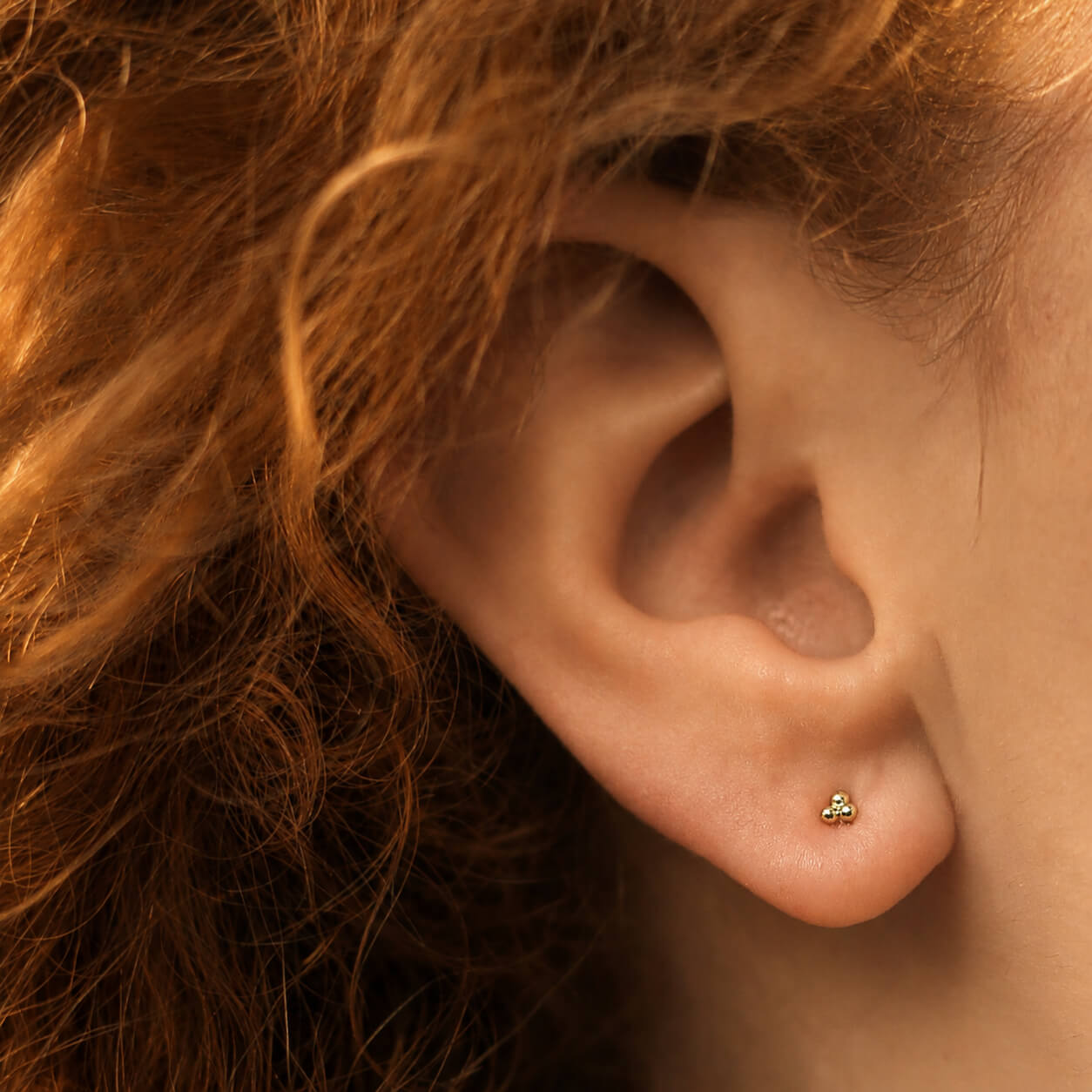
For a first lobe piercing, most people start with one small stud in each ear. Save hoops, statement studs, and stacks for after the piercing has healed.
Best Metals for a First Piercing
Titanium is the most widely used metal for new piercings. Medical-grade (ASTM F-136) titanium is lightweight, nickel-free, and the same alloy used in surgical implants, so it suits sensitive ears and costs less than gold.
Solid 14k or 18k gold works too, as long as it is solid (not plated, filled, or vermeil) and free of nickel and cadmium. Gold is heavier and pricier, but many people love it for a forever piece. Our solid 14k gold jewelry for new piercings is made in recycled 14k gold.
Finishes matter. Many piercers prefer uncoated metal while a piercing heals and add plated or coated pieces only once it has healed. MIRU's titanium jewelry is finished with a PVD coating to match gold and silver tones, so we recommend it for healed piercings. Our titanium jewelry care guide covers how to keep the finish looking new. For a new piercing, start with solid gold, and check with your piercer before wearing a coated piece. We're here with titanium the minute you've healed.
What Earrings to Avoid After a Piercing
- Plated, gold-filled, or vermeil jewelry, where a thin layer of gold sits over a different base metal.
- Sterling silver, which can tarnish in a healing piercing and discolor the skin.
- Mystery metal and "surgical steel" without a certification. "Hypoallergenic" on its own isn't a standard.
- Butterfly backs and piercing-gun studs, which press into the skin and trap buildup.
- Hoops, dangles, and heavy studs you pick out yourself, until the piercing has healed. Movement and weight slow healing. A few placements, like the daith, are usually pierced with a ring, and your piercer will choose that starter ring for you.
If your piercing becomes very red, hot, swollen, or painful, or you notice discharge or a fever, see a doctor or other healthcare professional, and don't take the jewelry out unless they tell you to.
What Earrings Can You Wear After a Piercing, and When?
Leave your starter earrings in until the piercing has healed. Lobes typically need about 6 to 10 weeks for the initial healing, and cartilage piercings take several months to a year, depending on where they are. Our guide to every ear piercing lists healing times by placement.
Your first change is usually a downsize: once the swelling settles, your piercer swaps the long starter post for a shorter one so it sits flush. That swap happens at the studio, during healing, not at home.
Wait until the piercing has fully healed before you change earrings yourself, and keep jewelry in it the whole time it's healing. Even after that, wear earrings most of the time for the first several months, because a newer piercing can shrink quickly when it's empty. Our guide to changing your piercing jewelry walks through it step by step.
Your Next Earrings: What to Wear Once You've Healed
Once you've healed, you can choose earrings for how they look and feel. Flat back earrings are the easiest way to keep the comfort of your starter studs. MIRU's push pin flat backs are made in medical-grade (ASTM F-136) titanium and come in the sizes most piercings need:
- Lobes: 20 gauge (0.8mm), 6mm or 8mm posts. Our Nap Earrings® are pairs made to sleep in.
- Cartilage: 16 gauge (1.2mm) for most placements and 18 gauge (1.0mm) for some healed piercings, in 6mm or 8mm posts.
Not sure of your size? Check our jewelry sizing guide or ask your piercer what they used. If you want to know why push pins are comfortable to wear day and night, read how to wear flat back earrings.
Shop flat back earrings




Keep Reading
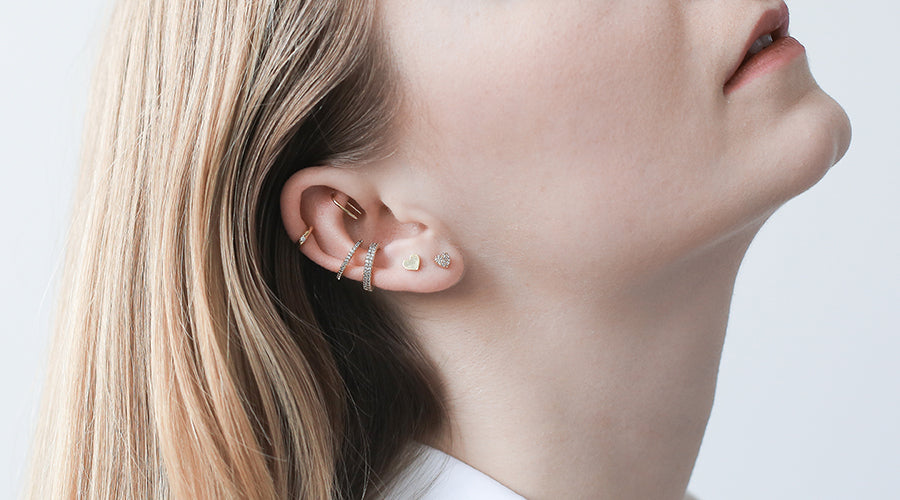
Getting Your Ears Pierced: Everything You Need to Know
Everything you need to know about your first ear piercing, whether lobe or cartilage: how it works, how much it hurts, and how to take care of it.
Read more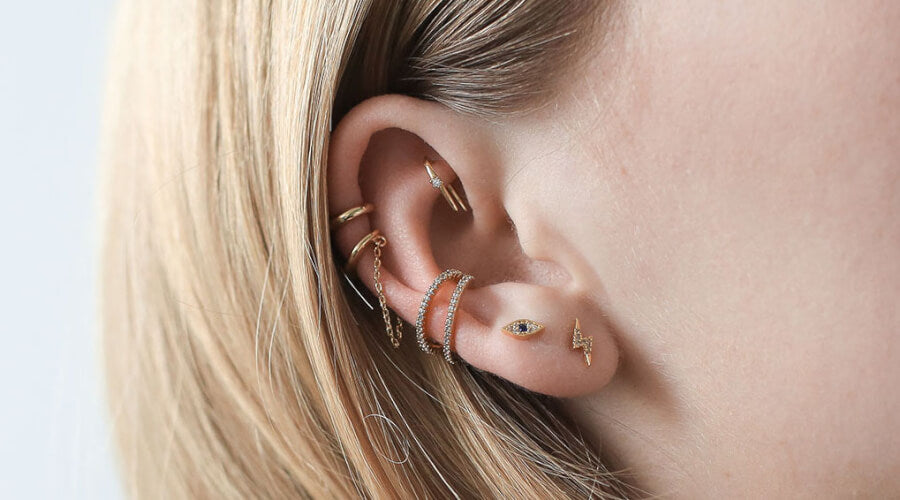
The Ultimate Guide to Ear Piercings: All of the Piercings, Explained
Here’s everything you need to know to get your ear party started.
Read more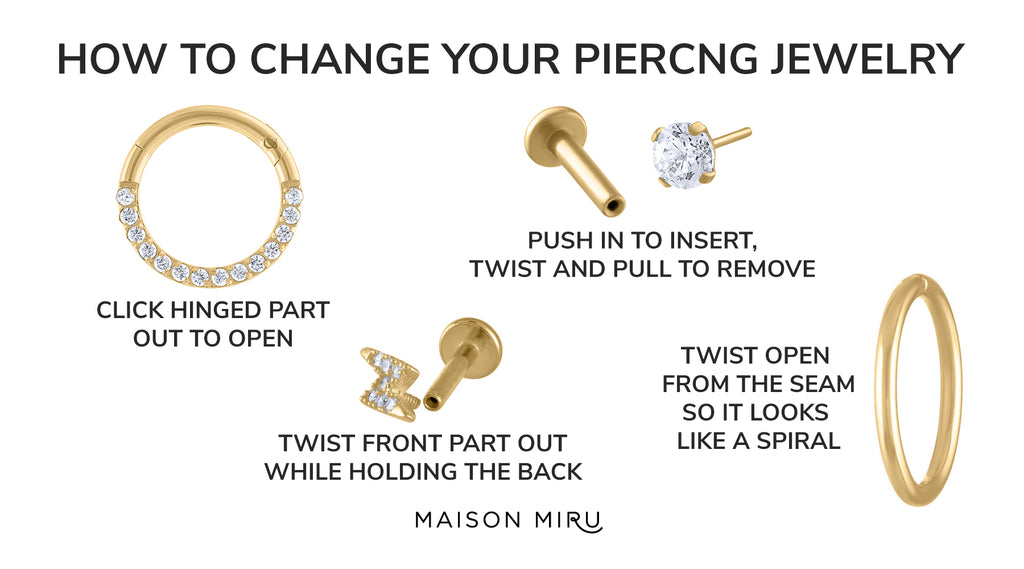
How to Change Your Piercing Jewelry
A handy little guide all about piercing jewelry and how to change out your flat back earrings and cartilage hoops.
Read more
How to Wear Flat Back Earrings
How flat back earrings work, how to put them in, and what size to get for your lobes and cartilage.
Read more