


Everything You Need to Know About Rook Piercings
A rook piercing sits in the ridge of cartilage that runs between your inner and outer ear, just above the daith and tragus. It is one of the more hidden ear piercings, tucked into a fold most people never notice until it is wearing a hoop.
This guide covers what the piercing is, how much it hurts, how long it takes to heal, what gauge and size you need, and whether you can wear a hoop in it.
Rook Piercing Fast Facts
- PLACEMENT: The cartilage ridge between your inner and outer ear, above the tragus.
- PAIN LEVEL: 7/10. A thick fold of cartilage, so more intense than most ear piercings.
- HEALING TIME: 6 to 18 months.
- GAUGE: 16 gauge (1.2mm) is standard. Stay at the gauge you healed at unless your piercer says otherwise.
- JEWELRY SIZE: Typically a 6mm to 8mm inner diameter hoop once healed.
- JEWELRY: A curved barbell to heal in, then cartilage hoops once healed.
What Is a Rook Piercing?
Look at the inside of your ear, just above the small flap that covers your ear canal. The ridge of cartilage that curves up from there toward the top of your ear is the antihelix, and the rook piercing goes through the thickest part of that fold. Piercers pierce it vertically, so the jewelry shows at both the top and the bottom of the ridge.
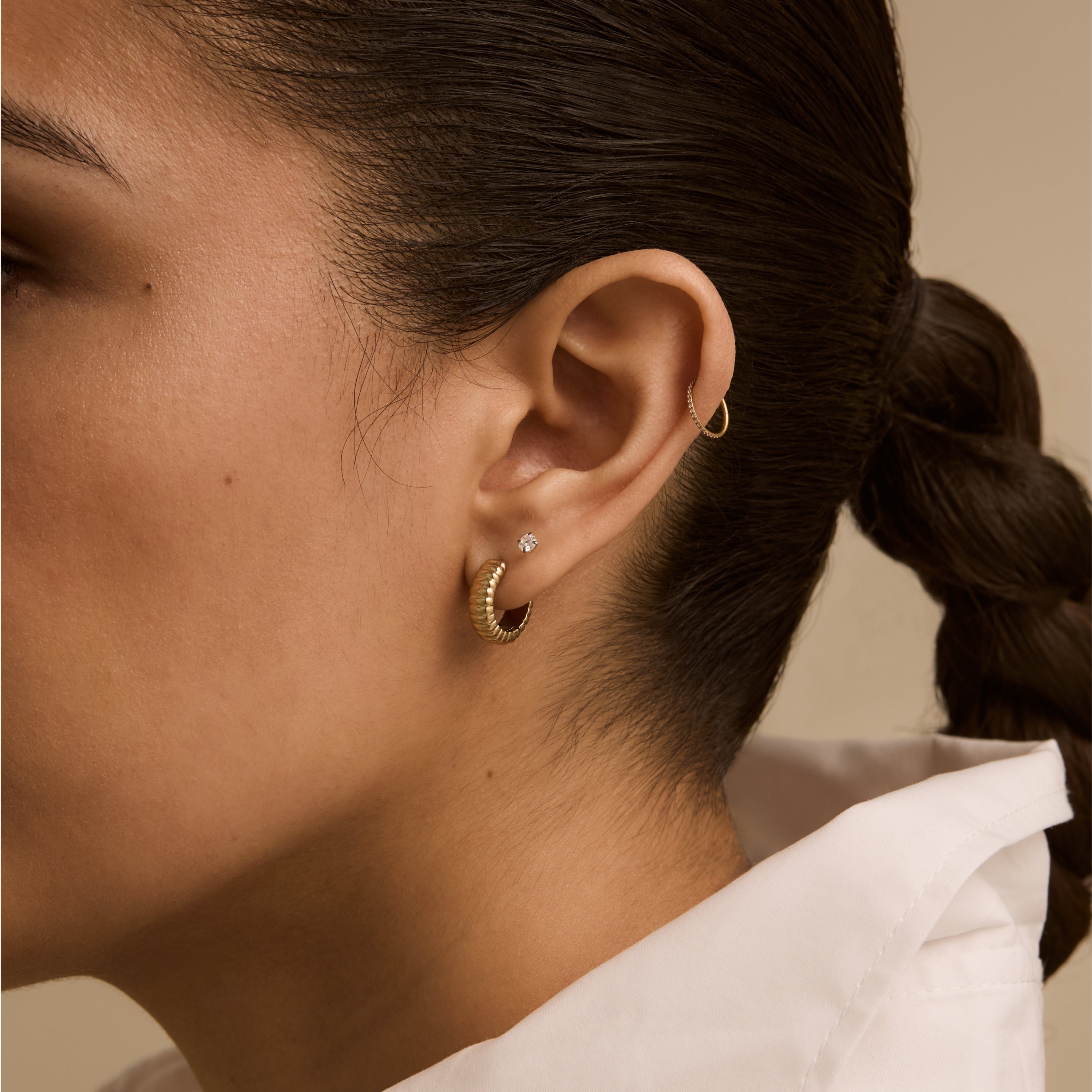
Because it sits inside the ear rather than along the rim, a rook is more private than a helix or tragus. From the front you mostly see a small curve of metal, which is why hoops suit it so well.
Not every ear has a rook that is deep and defined enough to pierce. A good piercer will feel the ridge first and tell you honestly whether it will hold jewelry comfortably. If yours is shallow, a daith just below it or a forward helix just above gives a similar hidden-gem look.
Does a Rook Piercing Hurt?
A rook piercing rates about a 7 out of 10 for pain, one of the more intense ear piercings. Pain is personal and depends on your anatomy and your piercer, but the reason it ranks high is consistent: the fold it passes through is thick and dense, so the needle travels through more cartilage than it does for a helix or tragus, and you feel real pressure as it goes.
The sharp part lasts a few seconds. What people remember afterward is the ache: a rook tends to throb for the first day or two and stays tender to the touch for a few weeks, especially if you catch it with a brush or lie on it.
If you are nervous about the pain, it helps to eat beforehand and take your time. Choose an experienced piercer who can tell you whether your anatomy suits a rook before anyone picks up a needle.
How Long Does a Rook Piercing Take to Heal?
Plan on 6 to 12 months, and up to 18 for some ears. The range is wide because rook anatomy varies so much, and because the fold is thick, so the channel takes a long time to settle. Many rooks look fine after a few months while still being fragile inside.
A few habits make the difference:
- Leave the starter jewelry in until your piercer confirms it has healed. Rooks that get swapped early are the ones that bump up and stall.
- Clean it with sterile saline once or twice a day and let it dry. Do not twist or turn the jewelry.
- Sleep on the other side. Pressure on a healing rook can cause irritation bumps and slow healing.
- Watch hats, over-ear headphones, and hair. Anything that presses into the inner ear or snags the jewelry will set you back.
Once your piercer gives the all-clear, you can change the jewelry yourself. Our guide to changing piercing jewelry walks through it. Redness, tenderness, and a little clear crust are normal along the way. Increasing pain, heat, swelling, or yellow or green discharge are not; cartilage infections can become serious, so see a healthcare professional rather than waiting it out.
Rook Piercing Gauge and Jewelry Size
Rook piercings are done with a 16 gauge needle, which is 1.2mm thick. Standard lobe earrings are 20 gauge, about 0.8mm, so they are too thin for a rook and will let the channel shrink if you wear them there. Match your jewelry to the gauge you were pierced at.
Stay at the gauge your piercing healed at unless your piercer recommends a change. Jewelry that is thinner than the channel can shift and irritate a rook, so treat a move to 18 gauge (1.0mm) as your piercer's call, not a style choice.
For a hoop, the measurement that matters is the inner diameter. A healed rook typically takes a 6mm to 8mm hoop, snug enough to follow the fold without pinching it. Because rook anatomy varies so much, the surest way to confirm your size is to ask your piercer or measure the jewelry you are already wearing.
Not sure what you were pierced with? Ask your piercer, or read our jewelry sizing guide for how to measure what you already own.
The Best Rook Piercing Jewelry: Hoops and Curved Barbells
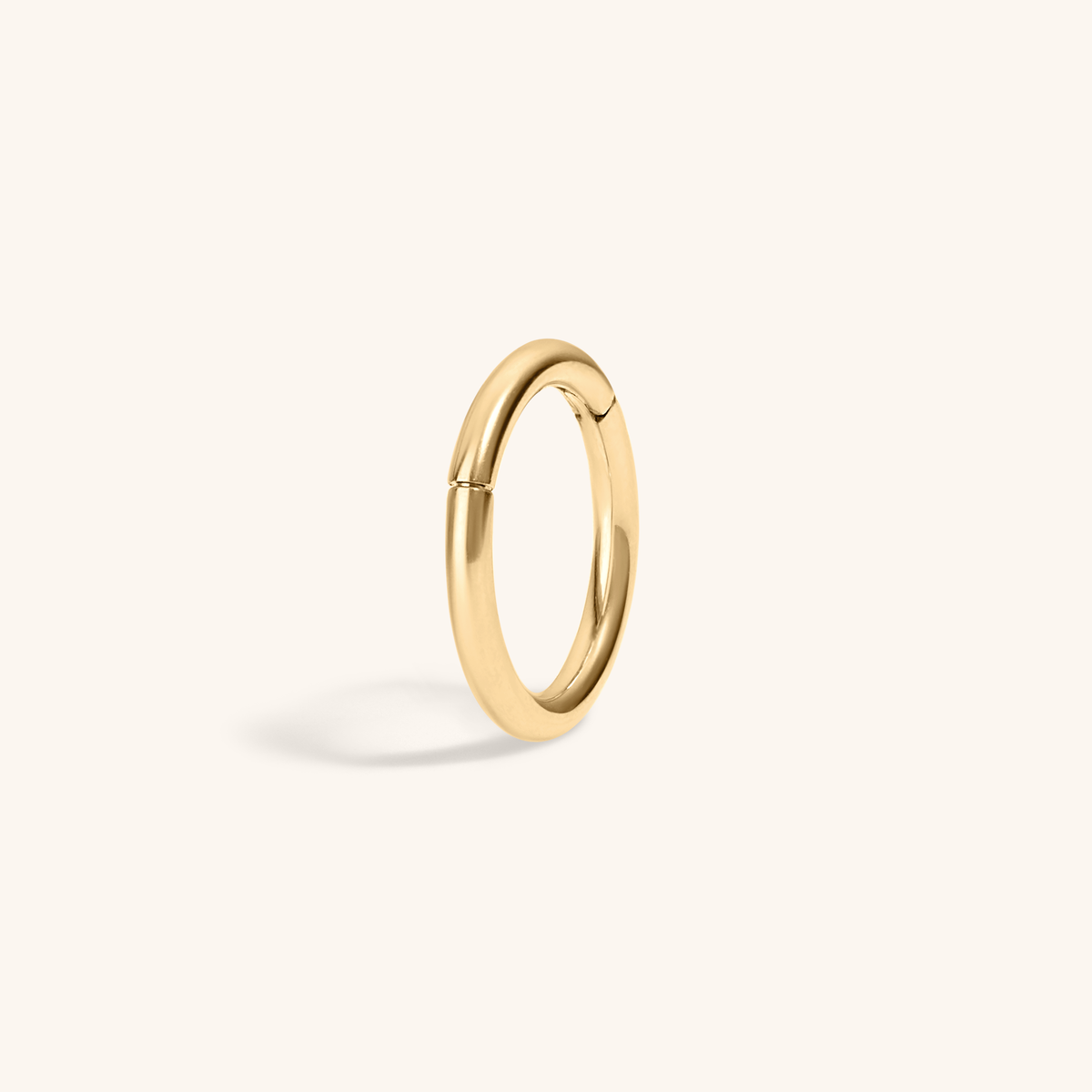
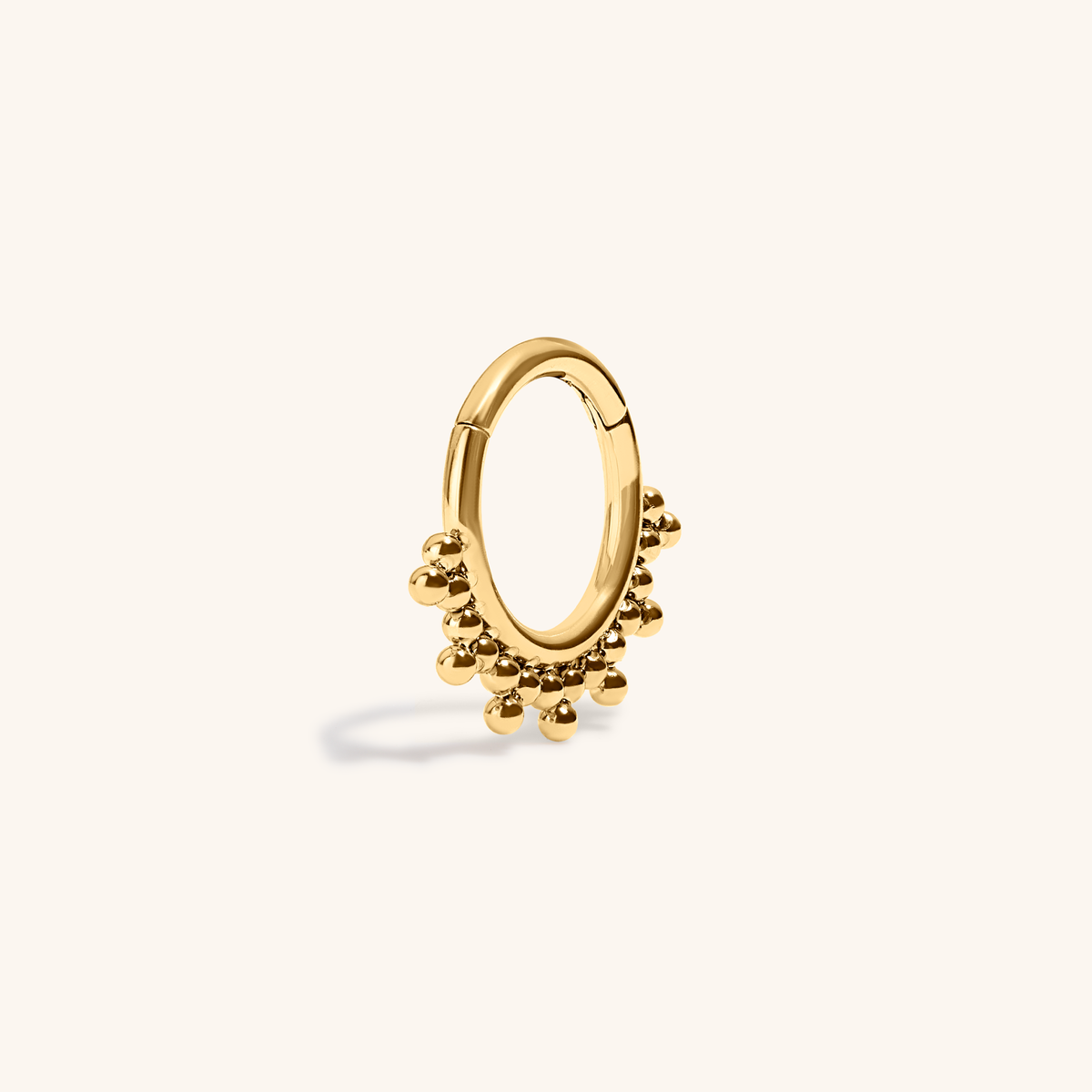
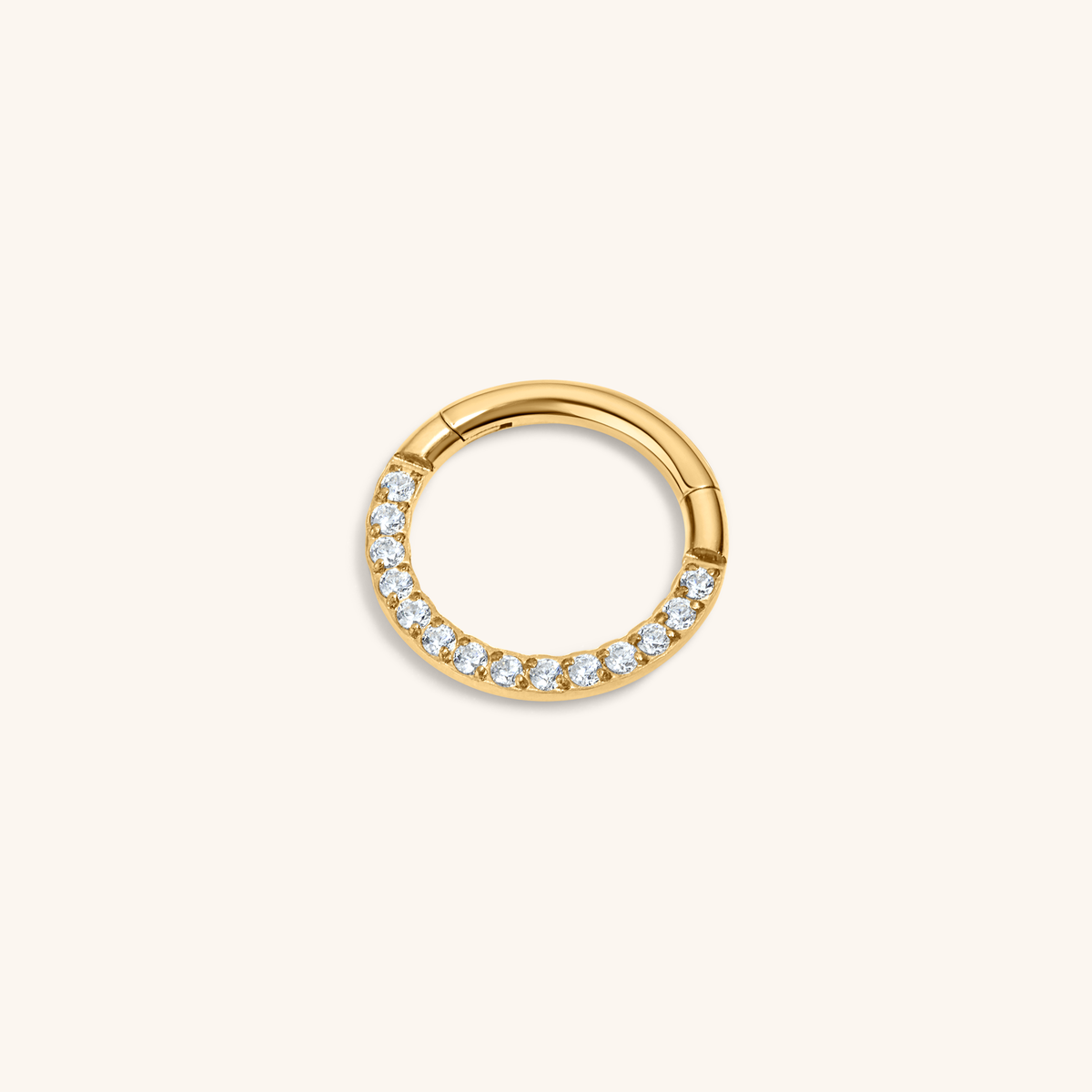
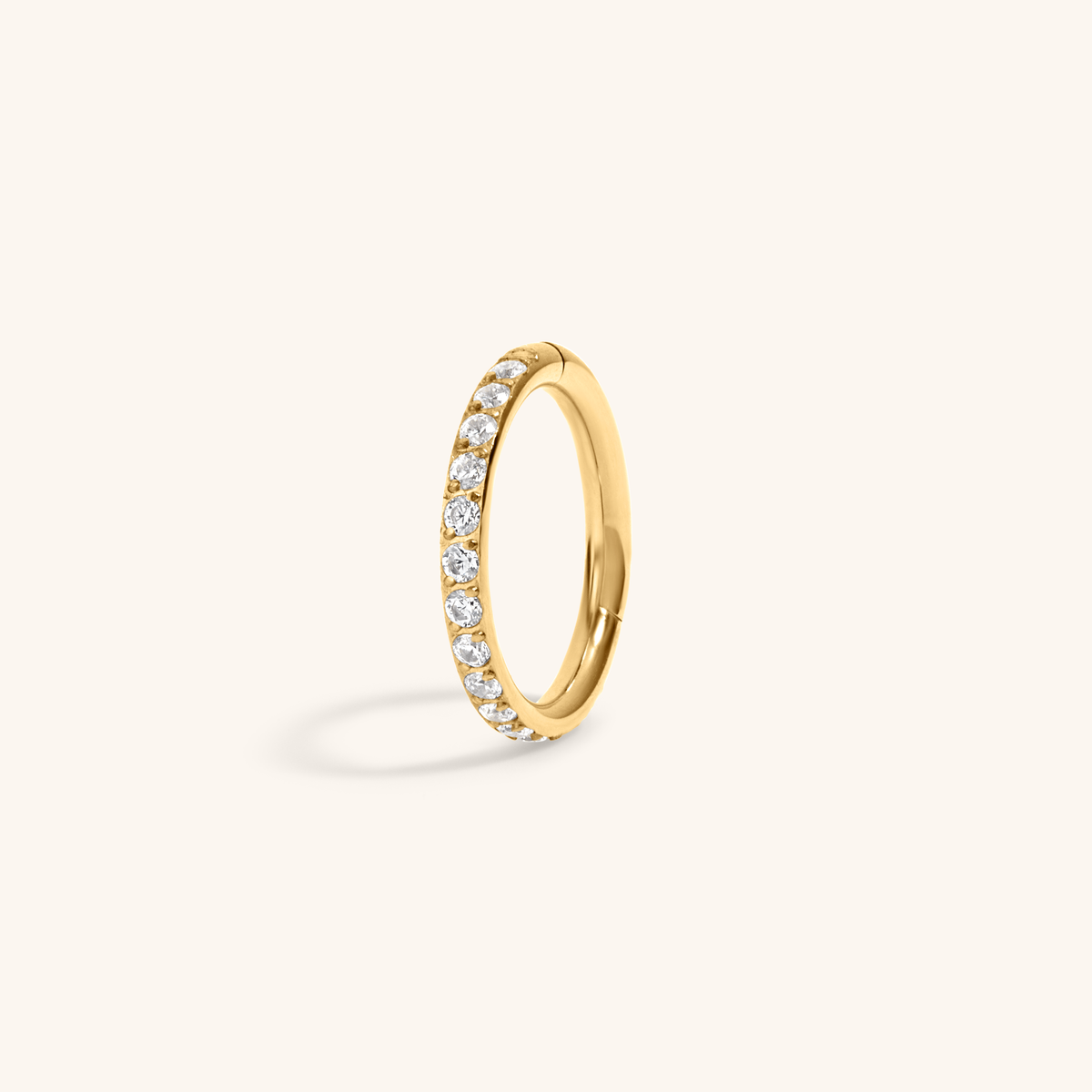
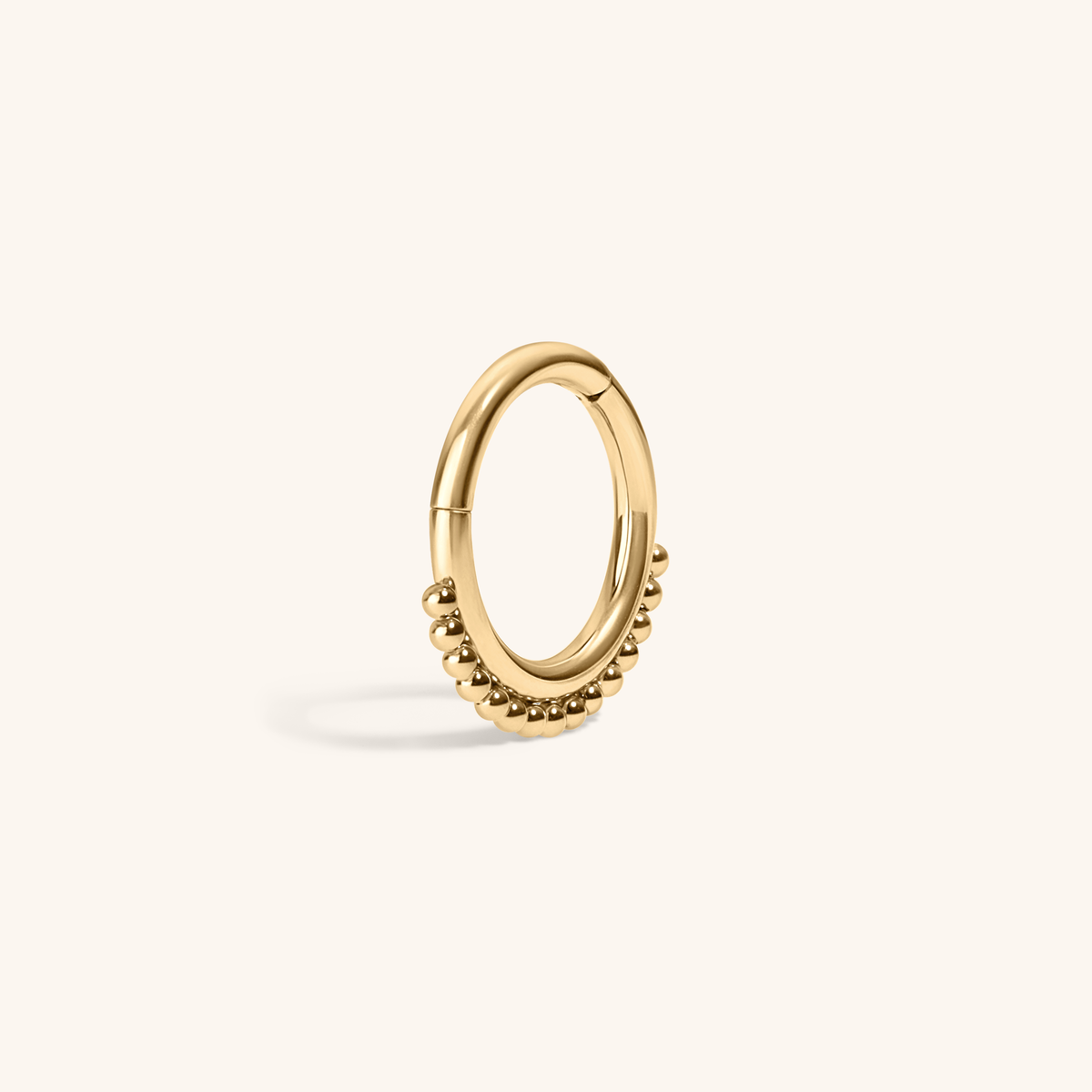
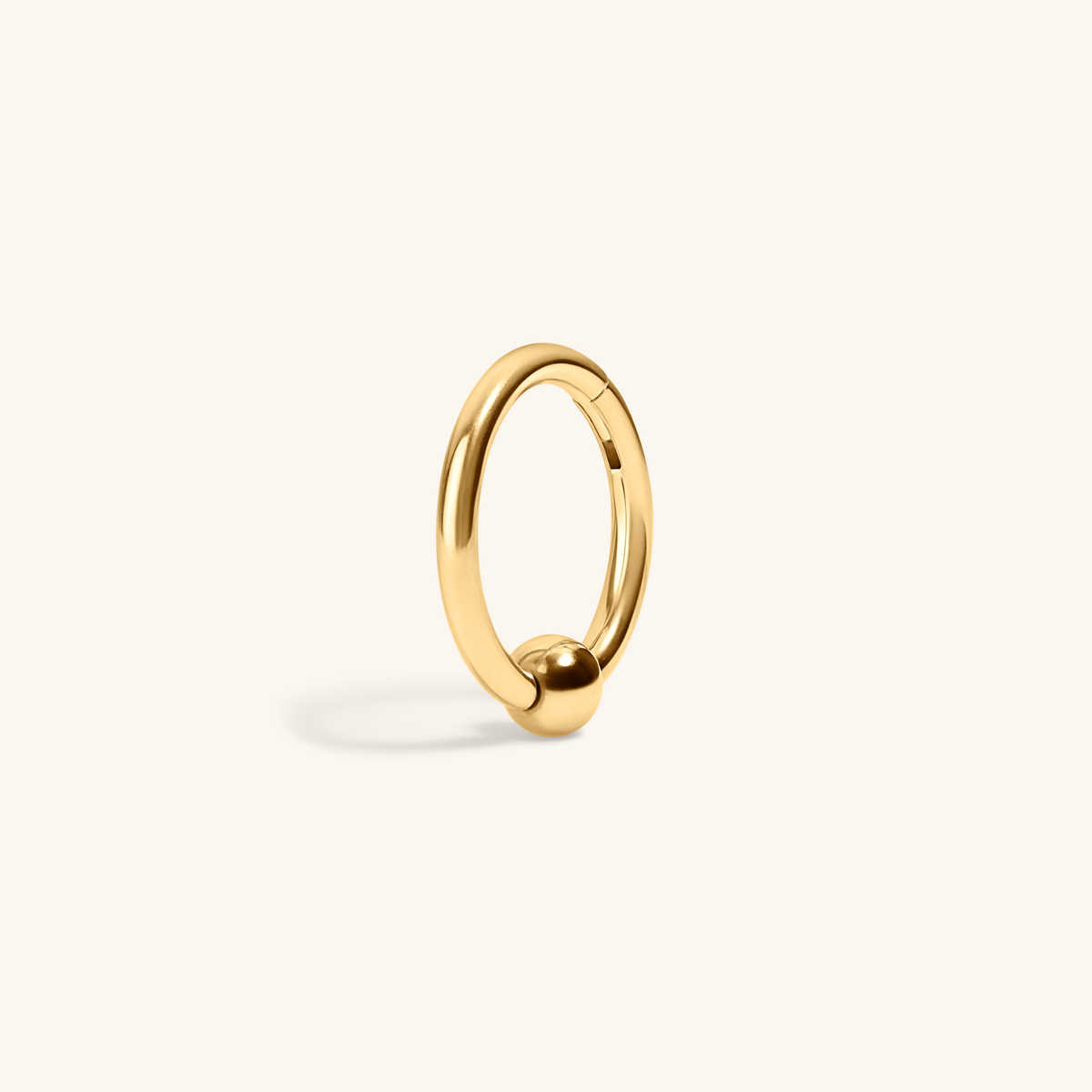
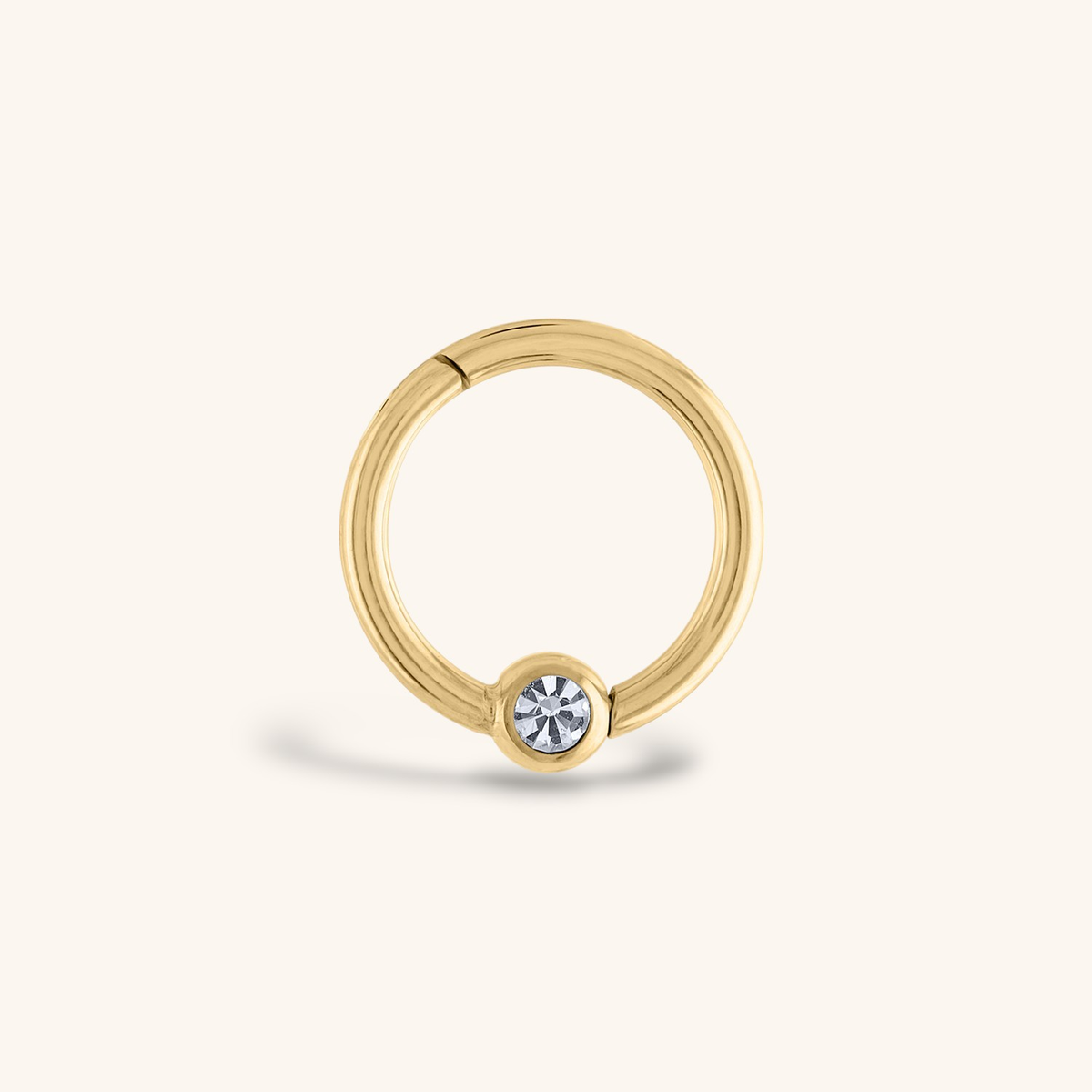
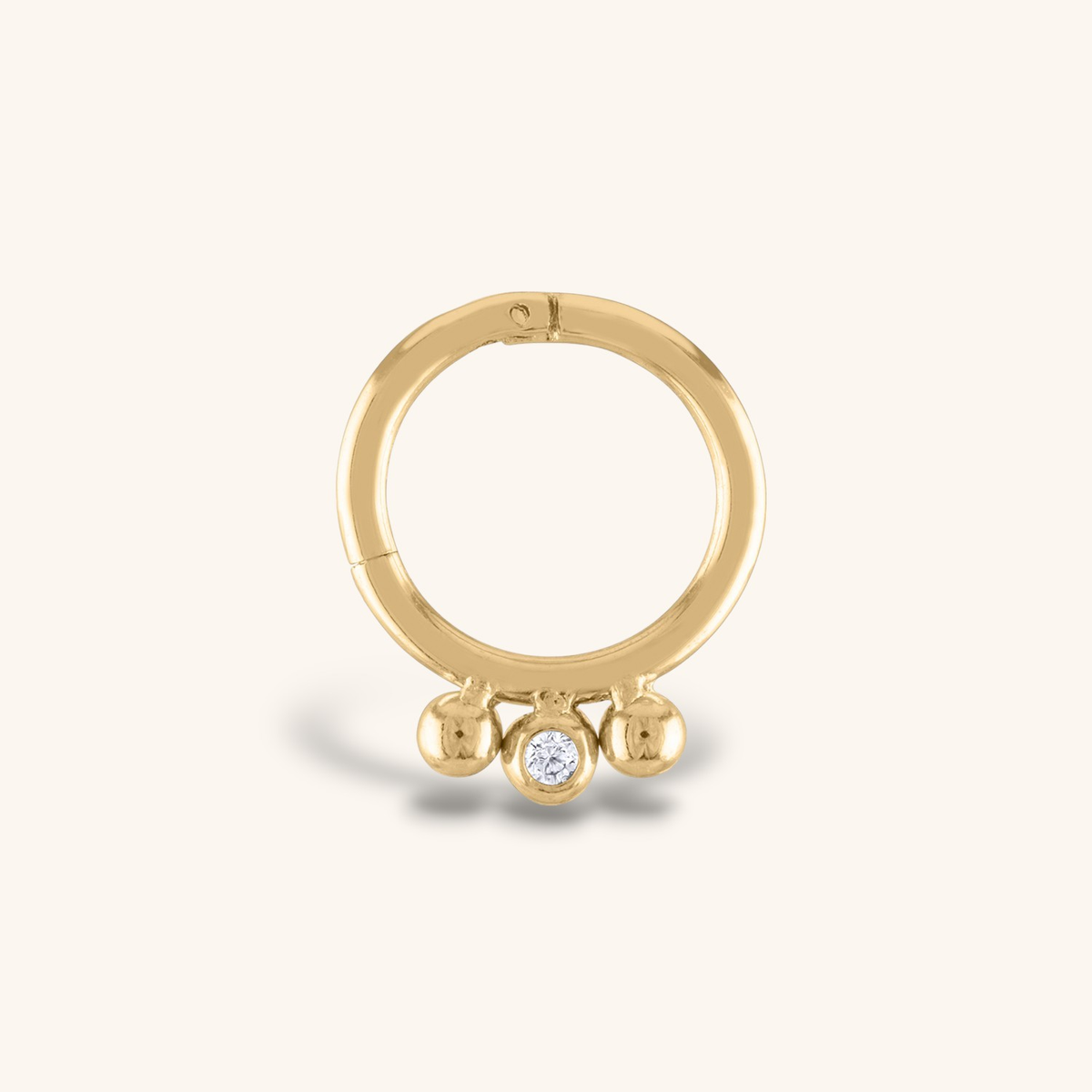
Can you wear a hoop in a rook piercing? Yes, and it is the look most people get a rook for. A small hoop tracing the ridge is the classic rook piercing jewelry, and once healed it is the easiest jewelry to live with here because nothing sticks out to catch on hair or pillows.
Most piercers will not start you with one, though. A new rook is usually pierced with a curved barbell, because a barbell sits still while the channel forms and a hoop moves every time you touch it. Wear the barbell through healing, then switch to a hoop once your piercer confirms it has settled.
When you are ready, our cartilage hoops come in 6mm and 8mm inner diameters at 16 gauge, made from medical-grade (ASTM F-136) titanium or solid 14k gold, both hypoallergenic and nickel-free. Your piercer can tell you which diameter sits best on your fold.
Shop rook piercing jewelry
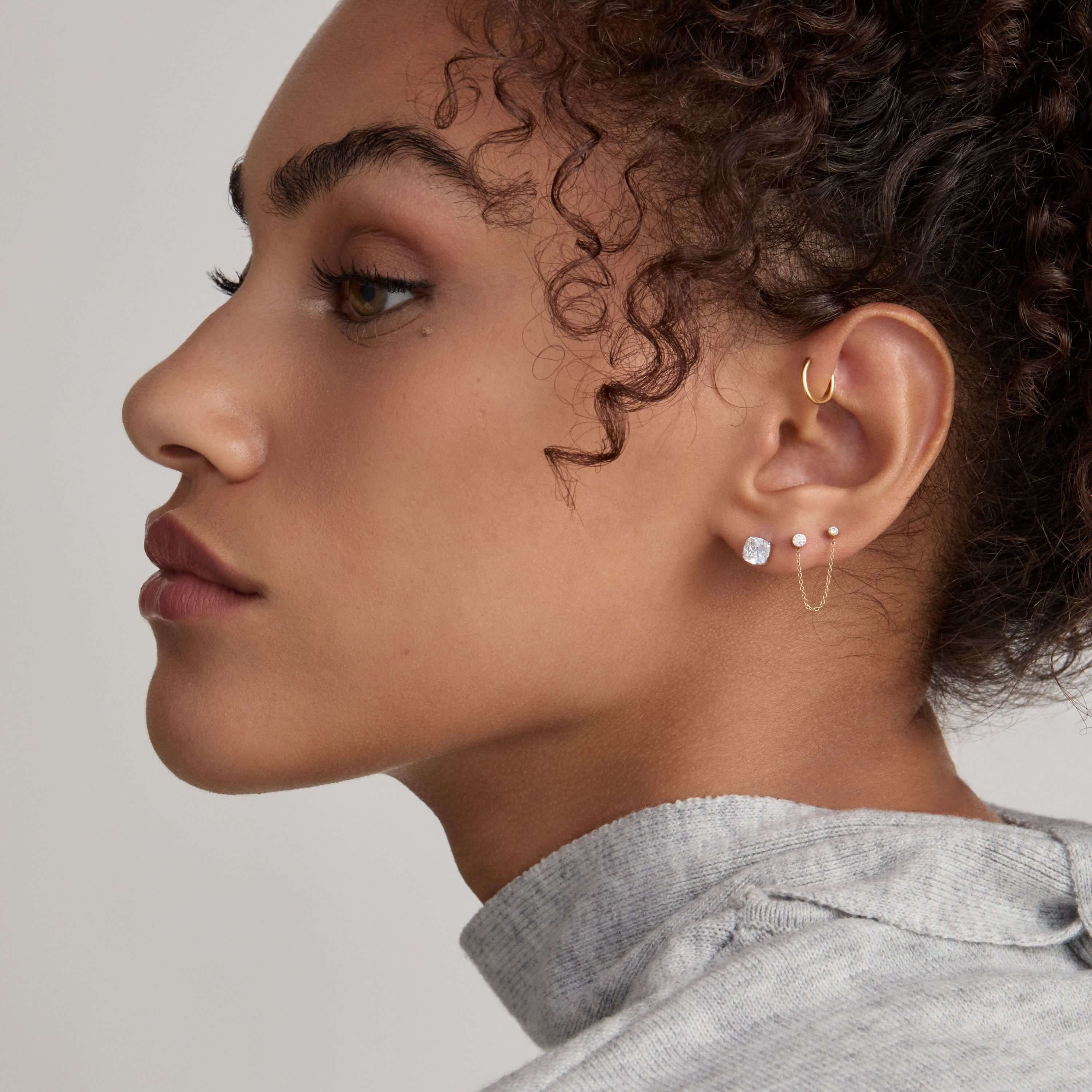
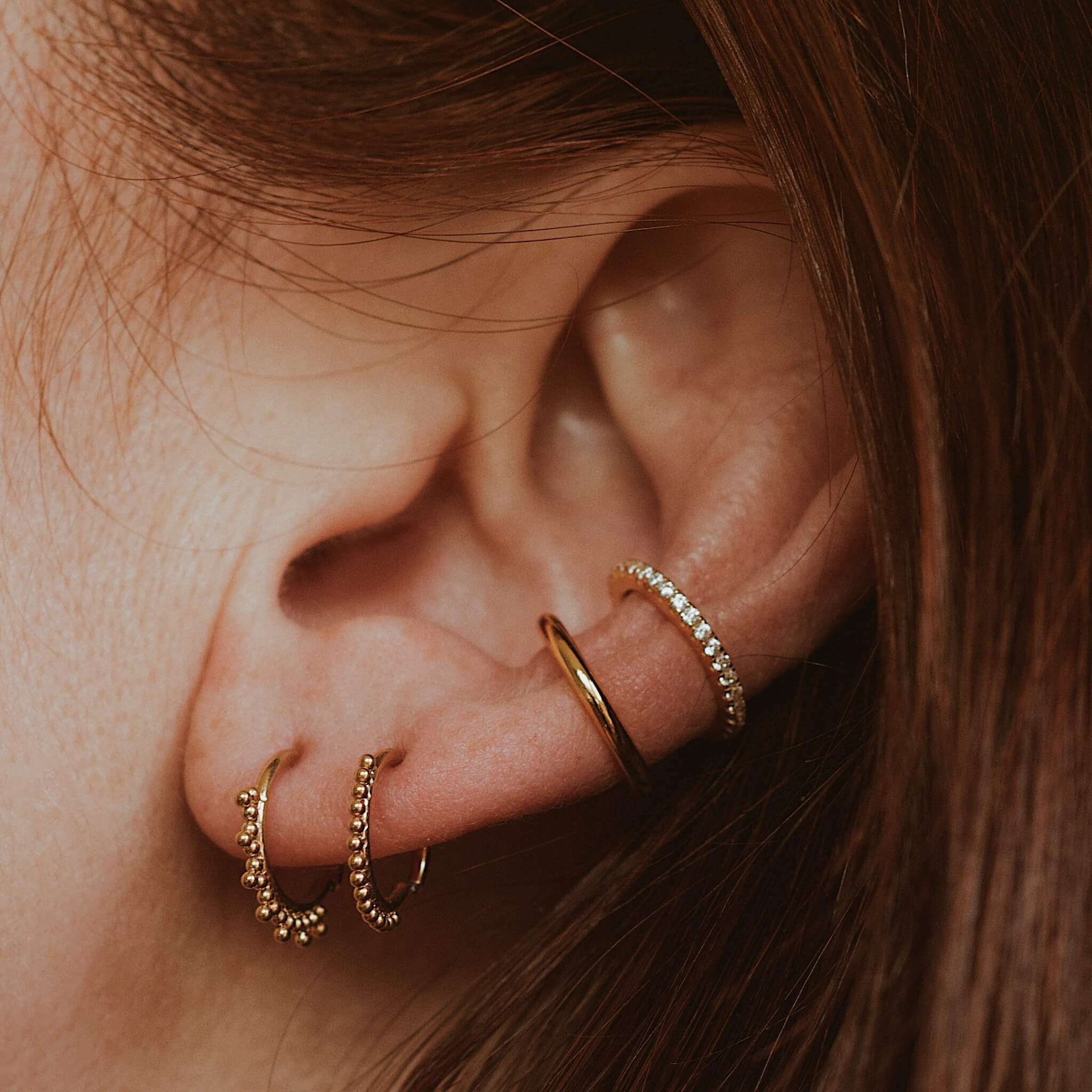





Rook Piercing Inspiration

Our Shooting Star Open Hoop, Eternity Ear Cuff, and Pave X and O Studs

@juliennelasker in our Tiny Crystal Studs, Classic Huggie Hoops, Eternity Arc Ear Cuff and Whisper Open Hoops ✨

@nicm556 in the Shooting Star Open Hoop, Pave Spike Studs, and the Tiny Crystal Studs ❤️
Keep Reading
The Ultimate Guide to Ear Piercings: All of the Piercings, Explained
Here’s everything you need to know to get your ear party started.
Read more
Tragus Piercing Guide: Everything You Need to Know
Everything you need to know about tragus piercings: pain level, healing time, cost and recommended jewelry.
Read more
Daith Piercing Guide: Everything You Need to Know
Everything you need to know about daith piercings: pain level, healing time, cost and recommended jewelry.
Read more
Forward Helix Piercing Guide: Everything You Need to Know
Everything you need to know about forward helix piercings: pain level, healing time, cost and recommended jewelry.
Read more